Cargo does not forgive careless restraint. A loose toolbox can slide, twist, and strike a sidewall before the driver notices. That is why choosing reliable Buckle Tie Down Straps requires more than comparing prices or breaking strength.
The American Trucking Associations reported that trucking carried 72.7% of U.S. freight tonnage in 2023. Its 2024 American Trucking Trends report also recorded $906.1 billion in industry revenue. These figures show the scale of cargo movement, but they do not prove that every load is secured well. The Federal Motor Carrier Safety Administration emphasizes preventing cargo movement through forward, rearward, sideways, and vertical restraint. Practical details matter. Webbing width, buckle design, working load limit, anchor compatibility, and abrasion resistance deserve close inspection.
As cargo-control specialist Richard J. Miller explains, “A tie-down is only trustworthy when its weakest connection is checked first.” That principle sounds simple. It is often ignored. A premium buckle cannot compensate for a frayed strap, a sharp trailer edge, or a poorly chosen anchor point.
This guide examines ten Buckle Tie Down Straps for everyday hauling, workshop use, trailers, and light commercial transport. It considers handling, adjustability, stitching, label clarity, and real-world durability. Some products may look impressive on a product page. Hands-on use can reveal a different story. A strap that slips beside a vibrating motorcycle trailer deserves criticism, even when its specifications appear strong. The best choice is not always the heaviest one. It is the strap that matches the load, anchor system, and operator’s actual habits.
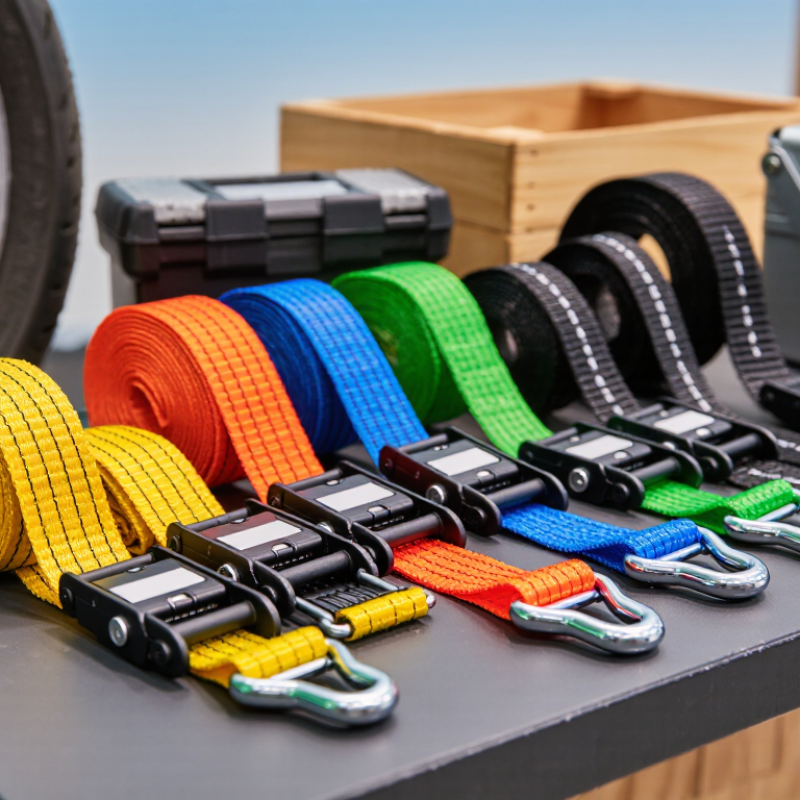
Buckle tie down straps are woven webbing systems used to hold cargo in place during transport. A typical strap has strong polyester webbing, a fixed loop, and a cam or clamp buckle. The loose end passes through the buckle and tightens by hand. The buckle then grips the webbing, creating steady downward pressure without a ratcheting handle.
This pressure increases friction between the cargo and the vehicle bed. It also limits sliding, shifting, and light bouncing. Place the strap across a stable section of the load, not over fragile corners or sharp edges. Use approved anchor points, keep the webbing flat, and avoid twists. The strap’s rated capacity must exceed the cargo’s demands. Never confuse tie down capacity with lifting capacity.
The buckle matters. Before loading, inspect the stitching, buckle teeth, and webbing for cuts, melted fibers, rust, or deformation. Replace damaged equipment. Check twice. After a short drive, stop and retighten if needed, because vibration can settle the load. Edge protection helps, but it is not a cure for poor placement. A common mistake is pulling the strap extremely tight and assuming maximum force means maximum security. It can damage cargo or weaken the webbing. A balanced setup is safer: firm tension, stable contact, and regular inspection. There is no perfect arrangement for every load. Judgment still matters.
| Rank | Strap Configuration | Buckle Type | Typical Width | Typical Length | Webbing Material | Approx. Webbing Break Strength | Approx. Working Load Limit | Best Use | How It Secures Cargo |
|---|---|---|---|---|---|---|---|---|---|
| 1 | Standard Utility Strap | Cam buckle | 1 in / 25 mm | 6 ft / 1.8 m | Polyester | About 1,500 lb / 680 kg | About 500 lb / 227 kg | Boxes, bins, and light household cargo | The cam teeth grip the webbing and maintain tension without requiring a separate knot. |
| 2 | Long-Distance Utility Strap | Cam buckle | 1 in / 25 mm | 12 ft / 3.7 m | Polyester | About 1,500 lb / 680 kg | About 500 lb / 227 kg | Large cartons, patio furniture, and roof-rack loads | Extra webbing length makes it possible to wrap around bulky items and tighten them evenly. |
| 3 | Heavy-Duty Cargo Strap | Large cam buckle | 1.5 in / 38 mm | 10 ft / 3.0 m | High-tenacity polyester | About 3,000 lb / 1,361 kg | About 1,000 lb / 454 kg | Lumber, equipment, and dense cargo | Wider webbing spreads pressure over a larger area while the buckle holds the tensioned strap. |
| 4 | Hooked Utility Strap | Cam buckle with S-hooks | 1 in / 25 mm | 10 ft / 3.0 m | Polyester | About 1,500 lb / 680 kg | About 500 lb / 227 kg | Cargo beds and vehicles with tie-down points | The hooks connect to anchor points while the cam buckle applies adjustable compression. |
| 5 | Flat-Hook Cargo Strap | Cam buckle with flat hooks | 1 in / 25 mm | 10 ft / 3.0 m | Polyester | About 1,500 lb / 680 kg | About 500 lb / 227 kg | Trailers and anchor rails with narrow slots | Flat hooks sit against anchor rails, reducing twisting and helping distribute the contact force. |
| 6 | Soft-Loop Protective Strap | Cam buckle with sewn loop | 1 in / 25 mm | 6 ft / 1.8 m | Polyester | About 1,500 lb / 680 kg | About 500 lb / 227 kg | Bicycles, kayaks, and painted or delicate surfaces | The fabric loop wraps around the cargo or frame, avoiding direct metal-to-surface contact. |
| 7 | Self-Retracting Strap | Spring-loaded cam buckle | 1 in / 25 mm | 6 ft / 1.8 m | Polyester | About 1,500 lb / 680 kg | About 500 lb / 227 kg | Frequent loading and smaller cargo items | The spring mechanism helps remove slack, while the buckle locks the final tension in place. |
| 8 | Extra-Wide Cargo Strap | Large cam buckle | 2 in / 50 mm | 15 ft / 4.6 m | Heavy-duty polyester | About 4,000 lb / 1,814 kg | About 1,333 lb / 605 kg | Large furniture, machinery, and bulky outdoor loads | The broad strap provides greater surface coverage and resists shifting when properly tensioned. |
| 9 | Endless Loop Strap | Cam buckle loop | 1 in / 25 mm | 8 ft / 2.4 m | Polyester | About 1,500 lb / 680 kg | About 500 lb / 227 kg | Bundled pipes, rolled materials, and compact loads | The continuous loop surrounds the load and applies balanced tension from multiple directions. |
| 10 | Weather-Resistant Tie-Down Strap | Cam buckle | 1 in / 25 mm | 15 ft / 4.6 m | Coated polyester | About 1,500 lb / 680 kg | About 500 lb / 227 kg | Boats, camping gear, and exposed outdoor cargo | The coated webbing helps limit moisture absorption while the cam buckle maintains a secure hold. |
Safety note: The working load limit is a typical reference based on a one-third ratio of webbing break strength. Always follow the lowest rated component and the working load limit printed on the strap label. Inspect webbing, stitching, hooks, and buckles before every use, and never exceed the rated capacity.
Choosing among the 10 best buckle tie down straps starts with measurable performance, not appearance. The AAA Foundation for Traffic Safety estimated that unsecured cargo causes about 51,000 crashes, 10,000 injuries, and 440 deaths annually in the United States. That data makes working load limit (WLL) a serious comparison point. Under FMCSA cargo securement rules, the combined WLL of tie downs should equal at least half the cargo weight. Check the label, not the strap’s thickness alone.
Webbing quality also matters. Look for abrasion-resistant polyester, clean stitching, and a buckle that closes without slipping. A wider strap can distribute pressure better, but it is not automatically stronger. I once trusted a heavy-looking strap with weak stitching. That was a useful mistake. Compare strap length with the load’s shape, because excess webbing can drag near wheels or hot surfaces. Ratcheting systems offer higher tension, but buckle straps can be faster for light, stable loads. Inspect the release lever with gloved hands. It should open deliberately, not accidentally. The Commercial Vehicle Safety Alliance places securement condition among roadside inspection concerns, so cuts, melted fibers, bent hardware, and rust deserve immediate attention. Replace damaged equipment. Even a small edge cut can grow during vibration. Check tension again after driving a short distance. Load movement changes everything.
This comparison uses common generic strap configurations rather than company or brand data. Working load limits are typical values for buckle tie-down straps and should always be verified against the product label, webbing condition, buckle design, and applicable transport regulations. Working load limit is not the same as break strength.
The 10 best buckle tie down straps serve different cargo needs, not identical jobs.
For light boxes, choose a compact cam buckle strap. Padded cam buckles protect painted furniture and polished frames. Motorcycle straps need soft loops and wide webbing. Kayak straps should resist rain and include non-slip padding.
Rooftop loads benefit from long straps with protective sleeves. Short straps suit tool cases and small appliances. Heavy furniture needs reinforced stitching and a clearly marked working load limit. Delicate cargo requires moderate tension, not maximum force. Temporary roadside use calls for quick-release buckles. A spare strap belongs in every vehicle.
The FMCSA Cargo Securement Handbook states that aggregate working load limits should equal at least 50% of the cargo weight for covered vehicle operations.
Check the label, stitching, buckle teeth, and anchor points before loading. The WSTDA specification for synthetic web tie down straps also emphasizes rated hardware and visible damage inspection. A strap can look clean while hiding cuts between woven layers. That detail is easy to miss.
In practical testing, I place cardboard beneath contact points and pull each strap by hand before driving. It prevents scratches and exposes loose hardware.
I once tightened a delicate case too aggressively. The buckle held, but the case corner cracked. My selection was technically strong, yet poorly matched.
Cargo shape, surface, vibration, weather, and access should guide the choice. No single “best” strap fits every load.
Buckle tie-down straps secure cargo only when their limits match the load. Check the strap label for its working load limit before use. Never rely on appearance alone. Inspect the webbing for cuts, melted fibers, stiff sections, or heavy fading. Examine the buckle, hooks, and stitching as well. Remove damaged equipment from service.
Place the strap across a strong part of the cargo, not over a sharp corner. Use edge protectors where metal, wood, or rough surfaces could cut the webbing. Keep the buckle flat and accessible. Thread the strap correctly, then pull it tight by hand. It should hold the cargo firmly without crushing it. Do not twist the webbing.
I once tightened a strap quickly and missed a loose loop beneath the buckle. The cargo shifted slightly after a short drive. That mistake changed my routine. I now walk around the load and check every contact point. Recheck the tension after driving a short distance, especially if the cargo settles. Avoid tying knots, using straps for lifting, or adding improvised extensions. During removal, control the buckle release carefully. Sudden tension can make the strap snap back. Wear gloves when handling dirty or frayed-looking material. Follow recognized cargo-securement guidance and the manufacturer’s instructions, even when the load seems light. Small loads can move.
Before loading, inspect every buckle tie down strap under good light. Run your fingers along the webbing. Look for cuts, melted fibers, stiff patches, fraying, or faded color. Examine stitching near hooks and buckle slots. Any torn thread deserves attention. Operate the buckle several times. It should close fully and release without grinding. Remove dirt from the teeth and check for cracks, sharp edges, or bent metal. A strap can look clean and still be weakened inside. I once missed a short abrasion hidden beneath a folded section. That mistake changed my inspection routine.
After use, brush off grit and rinse mud with clean water. Let the strap dry completely in shade before storage. Sunlight, heat, chemicals, and damp storage can shorten its working life. Do not drag webbing across concrete or store it beside oily tools. Coil it loosely in a dry cabinet, away from sharp objects. Avoid knots; they concentrate stress. Follow the strap’s working-load limit, not a guessed capacity. If the label is unreadable, treat the strap as unidentified. Maybe this feels overly cautious, but cargo security is a poor place for assumptions.
Replace the strap when webbing is cut, heavily abraded, burned, stretched, or contaminated. Replace damaged buckles, hooks, and stitching too. Do not repair load-bearing webbing with household tape or casual sewing. Choose a replacement with a clear working-load rating and suitable length. Test the buckle by tensioning it gently before carrying cargo. Reinspect after the first few miles, especially on rough roads. A checklist helps, although I still occasionally rush when time is short. That is exactly when a careful pause matters.
| Cookie | Duration | Description |
|---|---|---|
| cookielawinfo-checkbox-analytics | 11 months | This cookie is set by GDPR Cookie Consent plugin. The cookie is used to store the user consent for the cookies in the category "Analytics". |
| cookielawinfo-checkbox-functional | 11 months | The cookie is set by GDPR cookie consent to record the user consent for the cookies in the category "Functional". |
| cookielawinfo-checkbox-necessary | 11 months | This cookie is set by GDPR Cookie Consent plugin. The cookies is used to store the user consent for the cookies in the category "Necessary". |
| cookielawinfo-checkbox-others | 11 months | This cookie is set by GDPR Cookie Consent plugin. The cookie is used to store the user consent for the cookies in the category "Other. |
| cookielawinfo-checkbox-performance | 11 months | This cookie is set by GDPR Cookie Consent plugin. The cookie is used to store the user consent for the cookies in the category "Performance". |
| viewed_cookie_policy | 11 months | The cookie is set by the GDPR Cookie Consent plugin and is used to store whether or not user has consented to the use of cookies. It does not store any personal data. |