Choosing among China’s top 10 Extruded Aluminum Profiles manufacturers requires more than comparing attractive websites. Buyers should examine production experience, technical capacity, quality controls, and communication reliability. This introduction frames a practical guide for sourcing profiles used in construction, machinery, transport, furniture, and industrial systems.
The evaluation considers billet quality, extrusion press capability, die design, tolerances, heat treatment, surface finishing, and packaging. Factory evidence matters. A serious supplier should explain alloy options, provide inspection records, and share realistic production timelines. Samples can reveal visible die lines, uneven anodizing, sharp edges, or inconsistent dimensions before large orders begin. Small details matter.
Names alone prove little.
The guide also considers engineering support and customization experience. Can the manufacturer improve a complex section without wasting excessive material? Can its team discuss wall thickness, corner radii, strength requirements, and finishing limitations clearly? These questions often separate a capable partner from a simple trading intermediary.
No ranking is perfect. Public information may be incomplete, product ranges can change, and some claims require direct verification. Therefore, the selected companies should be viewed as strong candidates, not automatic choices. Buyers should request recent certificates, production samples, reference projects, and written quality agreements. Site audits remain valuable when order volume is significant. Reliable sourcing depends on evidence, not confident promises. This approach aims to give readers a balanced starting point for comparing Chinese manufacturers with greater confidence and fewer costly surprises.
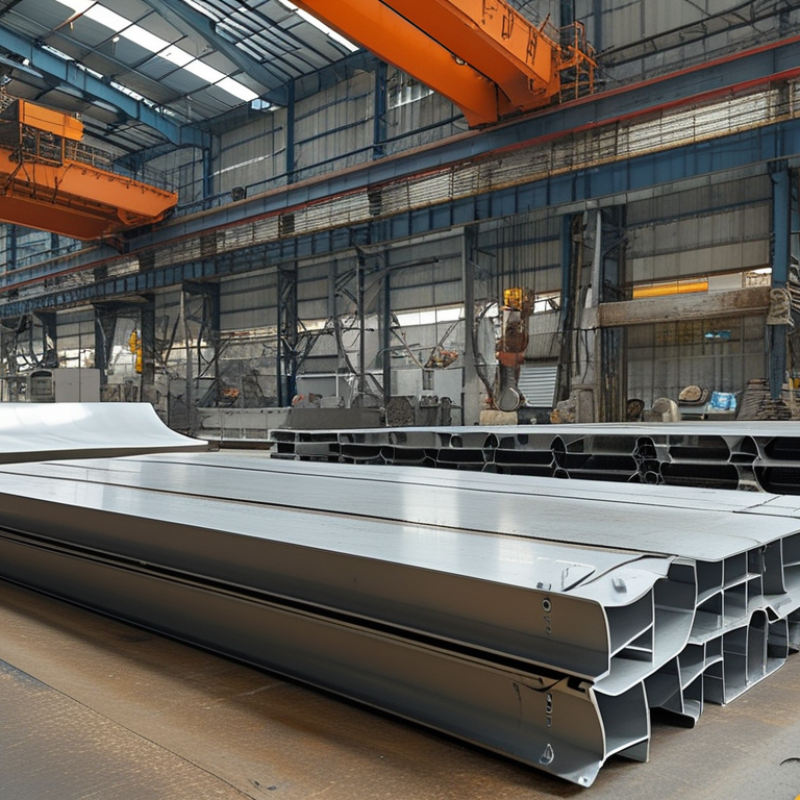
What Are Extruded Aluminum Profiles?
Extruded aluminum profiles are shaped sections made by pressing a heated aluminum billet through a steel die. The die controls the profile’s geometry, including channels, ribs, slots, and hollow cavities. After extrusion, the profile is cooled, stretched, cut, and often heat-treated. It may receive anodizing or powder coating for protection and appearance.
The process supports lightweight frames, heat sinks, transport components, solar structures, and industrial guards. Alloy selection matters. A 6063 alloy usually offers smooth surfaces and good formability, while 6061 generally provides higher structural strength. The International Aluminium Institute reported global primary aluminum production of approximately 70 million metric tons in 2023. This figure does not represent extrusion alone, but it shows the scale of the material supply behind downstream products.
Precision depends on die design, press control, cooling, and inspection. The Aluminum Association’s extrusion standards address dimensional tolerances, while quality teams commonly check straightness, wall thickness, hardness, and surface defects. A bright surface can still hide internal stress. This is often overlooked. Engineers should verify load calculations, alloy certificates, and coating thickness before approving a profile. In practice, a complex shape may reduce assembly work, yet it can increase die cost and create weaker thin-wall areas. The most suitable profile is not always the most complicated one.
| No. | Profile Category | Common Aluminum Alloys | Typical Temper | Typical Cross-Section Range | Common Surface Finish | Typical Applications |
|---|---|---|---|---|---|---|
| 1 | Architectural Door and Window Profiles | 6063 | T5 or T6 | 20–200 mm overall width | Anodizing, powder coating, PVDF coating | Window frames, door frames, sliding systems, and thermal-break assemblies |
| 2 | Curtain Wall Profiles | 6063, 6063A | T5 or T6 | 50–300 mm overall width | Anodizing, powder coating, fluorocarbon coating | Building façades, mullions, transoms, and glazed curtain wall systems |
| 3 | Industrial Framing Profiles | 6063, 6061 | T5 or T6 | 20–200 mm system width | Mill finish, anodizing, powder coating | Machine guards, workbenches, automation equipment, and modular structures |
| 4 | Heat Sink Profiles | 6063, 6061 | T5 or T6 | 20–250 mm width; fin height commonly 10–100 mm | Mill finish, anodizing | LED lighting, power electronics, inverters, control units, and communications equipment |
| 5 | Solar Mounting Profiles | 6005A, 6063, 6061 | T5 or T6 | 25–150 mm width | Anodizing, mill finish | Photovoltaic rails, clamps, supports, brackets, and rooftop mounting systems |
| 6 | LED Light Housing Profiles | 6063 | T5 | 10–100 mm width | Anodizing, powder coating | Linear LED fixtures, recessed lighting, surface-mounted channels, and diffusers |
| 7 | Furniture and Cabinet Profiles | 6063 | T5 or T6 | 10–100 mm width | Anodizing, powder coating, wood-grain transfer | Cabinet frames, handles, trims, partitions, shelving, and office furniture |
| 8 | Transportation Profiles | 6061, 6082, 6005A | T5, T6, or T651 | 30–300 mm overall width | Mill finish, anodizing, powder coating | Rail vehicles, trailers, buses, marine structures, and automotive components |
| 9 | Aluminum Tubes and Hollow Sections | 6063, 6061, 6005A | T5 or T6 | 10–300 mm outside dimension | Mill finish, anodizing, powder coating | Structural supports, handrails, furniture, pneumatic systems, and equipment frames |
| 10 | Custom Structural Profiles | 6061, 6063, 6005A, 6082 | T5, T6, or T651 | Defined by die design; commonly 10–400 mm | Anodizing, powder coating, PVDF coating, machining-ready mill finish | Specialized equipment, construction systems, energy projects, and engineered assemblies |
Extruded aluminum profiles are shaped aluminum sections produced by forcing a heated billet through a designed die. Actual dimensions, tolerances, mechanical properties, and finishes depend on the alloy, temper, die design, extrusion press, and applicable standards.
How to Evaluate China’s Top Aluminum Profile Manufacturers
A useful top-ten list should measure capability, not advertising visibility. China produced about 41.5 million tonnes of primary aluminum in 2023, according to the International Aluminium Institute. This scale creates strong supply depth, but it does not guarantee consistent extrusion quality. Buyers should compare billet composition, extrusion press capacity, die control, and documented defect rates. A capable supplier should provide mill certificates, dimensional inspection records, and traceable batch numbers.
The International Organization for Standardization emphasizes process control through ISO 9001, but certification alone is insufficient. Ask for recent audit findings, corrective-action records, and sample inspection data. For architectural profiles, check wall-thickness tolerance, surface finish, anodizing thickness, and color consistency under natural light. For industrial parts, review tensile strength, hardness, straightness, and thermal performance. Independent laboratory testing is valuable here. Sometimes, it exposes uncomfortable gaps.
Sustainability also deserves measurable scrutiny. The International Aluminium Institute reports that recycling aluminum requires far less energy than primary production, often around 5% of the energy needed. Therefore, evaluate recycled-content claims, electricity sources, scrap segregation, and carbon-accounting methods. Request shipment references from comparable markets, not only product photographs. A factory may show a polished showroom while hiding unstable lead times. I would also test a small production batch before signing a large contract. This costs more initially, but a ranking based only on price can become expensive very quickly.
China’s top 10 extruded aluminum profile manufacturers are usually judged by more than production size. Experienced buyers examine billet quality, die precision, extrusion force, surface treatment, and delivery control. A reliable factory should provide alloy certificates, dimensional reports, and traceable inspection records. Ask for samples before approving a large order.
Leading manufacturers often operate modern extrusion presses, aging furnaces, anodizing lines, powder-coating systems, and CNC equipment. These facilities support profiles for windows, curtain walls, solar structures, machinery frames, and transport equipment. A practical supplier can explain wall thickness, tolerance limits, temper conditions, and packaging methods without avoiding technical questions. Details matter.
Still, rankings can be imperfect. A factory with excellent architectural profiles may lack experience with industrial tolerances. Another may offer competitive prices but struggle with complicated dies or urgent revisions. I would also check factory audits, worker training, mold maintenance, and corrective-action records. One overlooked issue can create scratches, bowing, or inconsistent color across a shipment. Local production experience helps, but it does not replace clear communication and independent quality checks.
China’s leading ten manufacturers typically serve construction, transportation, solar energy, electronics, and industrial machinery. Their product ranges include architectural frames, heat sinks, curtain-wall sections, rail components, and customized enclosures. Standard alloys often include 6063, 6061, and 6005A, selected for strength, corrosion resistance, or surface quality.
Manufacturing capability matters more than a large catalog. Reliable factories operate extrusion presses with different tonnage levels, supporting both slim profiles and heavy structural sections. They also provide die design, billet heating, CNC cutting, drilling, bending, anodizing, powder coating, and assembly. Some facilities use automated inspection systems, while others depend heavily on manual checks. That difference can affect consistency.
A careful buyer should request alloy certificates, dimensional reports, coating thickness records, and sample approvals. Production traceability is valuable when profiles reach public buildings, vehicles, or electrical systems. Factory audits should examine die storage, furnace calibration, wastewater controls, and packaging methods. A polished website proves little. No factory is perfect. Even capable suppliers may struggle with complex tolerances, sudden material changes, or rushed delivery schedules. Asking for a pilot order can expose these weaknesses before full production begins. Local engineering teams may also improve communication during revisions, although this adds cost and requires clear technical drawings.
Choosing among China’s top 10 extruded aluminum profile manufacturers requires more than comparing rankings. A strong supplier should understand your drawings, alloy requirements, surface finish, and production tolerances. Ask for recent samples, not only catalog photos. Check whether the sample matches your requested wall thickness and dimensional accuracy.
Visit the factory online or in person. Review extrusion presses, die-making equipment, anodizing lines, and final inspection procedures. Request material certificates, inspection reports, and batch traceability records. A reliable manufacturer should explain its quality process clearly. It should also identify risks before production begins. A low quotation can become expensive when dies, packaging, or rework are excluded.
Tips: Prepare a detailed specification sheet. Include alloy grade, profile length, tolerance, finish, packaging, and expected volume. Ask for a pilot order before signing a large contract. Test the profiles in your actual assembly. Small fitting problems often appear late.
Communication quality matters. Notice how quickly the technical team answers precise questions. Vague replies may signal weak engineering support. Still, no supplier is perfect. Even experienced factories can miss a detail in a complicated drawing. Use written approvals, sample confirmation, and inspection checkpoints to reduce misunderstandings. Consider payment terms, lead times, export experience, and after-sales response together. The right manufacturer is not always the cheapest. It is the one that can repeatedly deliver usable profiles, with evidence.
| Cookie | Duration | Description |
|---|---|---|
| cookielawinfo-checkbox-analytics | 11 months | This cookie is set by GDPR Cookie Consent plugin. The cookie is used to store the user consent for the cookies in the category "Analytics". |
| cookielawinfo-checkbox-functional | 11 months | The cookie is set by GDPR cookie consent to record the user consent for the cookies in the category "Functional". |
| cookielawinfo-checkbox-necessary | 11 months | This cookie is set by GDPR Cookie Consent plugin. The cookies is used to store the user consent for the cookies in the category "Necessary". |
| cookielawinfo-checkbox-others | 11 months | This cookie is set by GDPR Cookie Consent plugin. The cookie is used to store the user consent for the cookies in the category "Other. |
| cookielawinfo-checkbox-performance | 11 months | This cookie is set by GDPR Cookie Consent plugin. The cookie is used to store the user consent for the cookies in the category "Performance". |
| viewed_cookie_policy | 11 months | The cookie is set by the GDPR Cookie Consent plugin and is used to store whether or not user has consented to the use of cookies. It does not store any personal data. |