Why Are Flexible PCBs Essential for Modern Electronics?
In today's fast-paced world, technology evolves rapidly. Flexible Pcbs have become essential for modern electronics. Their unique properties allow for innovation in design and functionality. Unlike traditional rigid circuit boards, flexible PCBs can bend and conform to various shapes. This characteristic significantly enhances device portability and versatility.
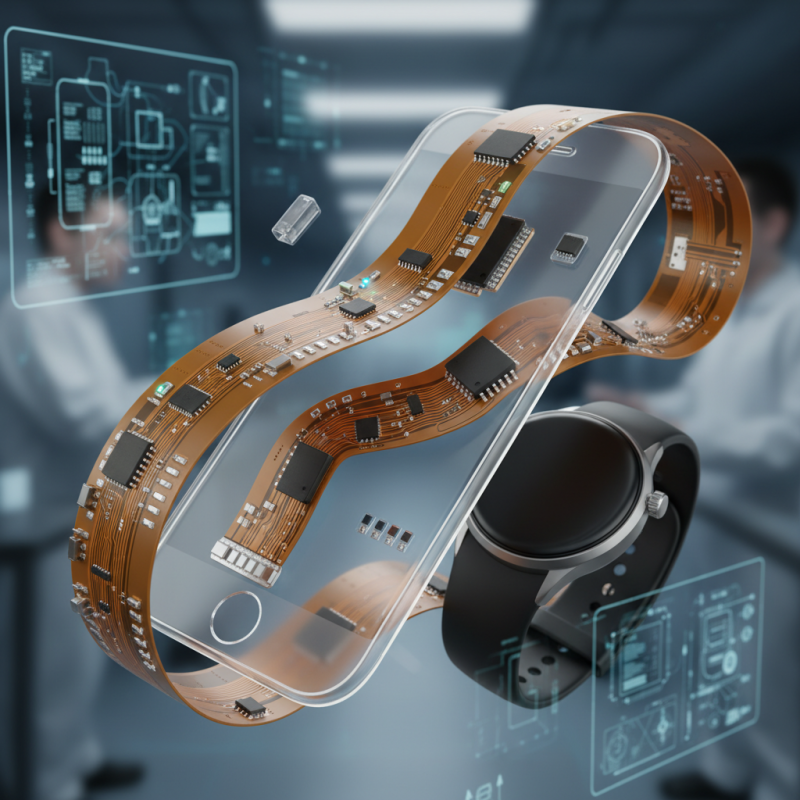
Consider smartphones and wearables, which benefit greatly from flexible PCBs. They enable slimmer designs and lighter weights. Moreover, flexible PCBs facilitate improved heat dissipation, contributing to device longevity. However, producing flexible PCBs involves challenges. The materials can be costly, and the manufacturing process may require precise techniques. There’s a learning curve for engineers as well.
Despite these obstacles, the advantages of flexible PCBs are clear. They open new possibilities for product development. Still, firms must focus on reducing costs and streamlining production to become competitive. As the demand for compact and multifunctional devices grows, flexible PCBs will play a vital role in shaping the future of electronics.
Flexible PCB Technology Overview and History
Flexible PCBs have transformed the electronics landscape over the years. Their origins trace back to the 1960s, when the budding field of electronics sought new design possibilities. Early flexible circuits were primarily used in military and aerospace applications. Over time, advancements in materials and manufacturing techniques broadened their use.
Today, flexible PCBs enable compact device design. They allow for complex shapes and configurations that rigid boards cannot accommodate. This flexibility opens doors to innovations in wearable technology and medical devices. However, the production process can be challenging. Aligning layers and ensuring reliability can lead to issues. Designers often face trade-offs between flexibility and durability.
These circuits have made electronics lighter and more adaptable. Devices can now fit into smaller spaces, enhancing user experience. Yet, as we push boundaries, continuous improvements are essential. Exploring new materials and methods may lead to better solutions. The journey of flexible PCBs is far from perfect, with many lessons still to learn.
Key Advantages of Flexible PCBs in Modern Electronics
Flexible printed circuit boards (PCBs) have transformed modern electronics in remarkable ways. Their adaptability and lightweight nature allow for innovative designs. Devices like smartphones and wearables often rely on these boards for their compact arrangements. Flexible PCBs can be easily bent and shaped. This makes them ideal for tight spaces. They save weight, which is crucial for portable electronics.
One significant advantage is durability. Flexible PCBs can withstand more stress than traditional rigid boards. They are less prone to damage from vibrations and impacts. This resilience extends the lifespan of devices. Additionally, they enable high-density designs. More components can fit in smaller areas, leading to smaller devices. However, this complexity can present challenges in manufacturing.
Despite their benefits, there are drawbacks. The production of flexible PCBs can be more expensive. This might limit their use in certain products. Moreover, not all designers may fully understand their potential. There is a learning curve involved. Embracing these technologies requires time and effort. The integration of flexible PCBs can lead to revolutionary changes, but awareness remains a key issue.
Applications of Flexible PCBs Across Various Industries
Flexible printed circuit boards (PCBs) are revolutionizing multiple industries. Their unique design offers a lightweight and compact solution. According to a recent report by ResearchAndMarkets, the global flexible PCB market is projected to reach $25 billion by 2025. This growth reflects their increasing importance in various applications.
In consumer electronics, flexible PCBs enable innovative devices like smartphones and wearables. They can easily fit into small spaces. Their reliability in extreme conditions is essential for medical devices, allowing for better patient monitoring. The automotive industry also utilizes flexible PCBs. They support advanced driver-assistance systems, adding to vehicle safety. However, challenges remain. The manufacturing process can be complex and costly. Quality control issues may arise, affecting performance and durability. Each of these factors requires careful consideration.
Overall, the impact of flexible PCBs across various sectors is undeniable. As technology evolves, their role will only expand. Yet, the industry must reflect on its limitations. Balancing innovation with reliability remains crucial for future development.
Manufacturing Processes for Flexible PCBs
Flexible PCB manufacturing involves several key processes. The primary methods include etching, lamination, and surface finishing. The etching process allows precise removal of copper layers. This creates intricate circuit designs on flexible substrates. It is essential for achieving high-density interconnections, crucial for modern electronics.
Lamination is another critical step. This process layers different materials together. It enhances durability and flexibility. With the global flexible PCB market projected to reach $30 billion by 2027, the importance of effective lamination cannot be overstated. Proper lamination ensures that these circuits withstand bending and twisting.
Surface finishing protects against oxidation and provides solderability. Techniques such as immersion gold and ENEPIG are commonly used. Each method has trade-offs. While some offer better conductivity, others prioritize long-term reliability. Despite advancements, challenges remain, like managing manufacturing costs and maintaining quality standards. Striking a balance between complexity and efficiency is an ongoing conversation in the industry.
Future Trends and Innovations in Flexible PCB Design
Flexible printed circuit boards (PCBs) are at the forefront of modern electronics innovation. As consumer electronics shrink, the demand for compact and lightweight designs grows. Reports predict that the flexible PCB market will reach $28.52 billion by 2026, driven by advancements in wearable technology and IoT devices.
In the realm of design, incorporating multilayer structures is becoming standard. These allow more functionality in smaller spaces. Concepts such as 3D printing are influencing flexible PCB manufacturing. However, challenges persist. The materials used must balance flexibility and durability. Not all flexible PCBs can withstand repeated bending without failure. Data suggests around 10% of designs fail in critical applications.
Future innovations could include improved material compositions. Researchers are exploring conductive inks and stretchable materials. These may enhance performance while maintaining flexibility. However, achieving widespread adoption requires overcoming scalability issues. Production methods still need refinement. As trends evolve, the path to perfecting flexible PCBs is far from linear and requires ongoing analysis.
