Superabrasive

Top China Cleanroom Chiller System Manufacturers?

A cleanroom is not simply a cold room. It is a carefully controlled environment where temperature, humidity, airflow, and particle levels affect production quality. The Cleanroom Chiller System sits behind that control, often running quietly while equipment and people add heat. Small details count.

Demand for reliable temperature control is tied to growth in high-tech manufacturing. The Semiconductor Industry Association’s 2024 factbook, using WSTS data, reported global semiconductor sales of $627.6 billion in 2024, up 19.1% from 2023. That figure does not measure chiller demand directly. It does, however, show the scale of an industry that depends on tightly managed production environments. ISO 14644-1:2015 defines cleanroom air cleanliness classes; it does not prescribe a chiller design. Buyers must therefore assess equipment against their own process conditions.

For readers asking, “Top China Cleanroom Chiller System Manufacturers?”, a useful comparison goes beyond brand claims. Look for documented cooling capacity, stable temperature control, energy performance, service coverage, and experience with the required cleanroom application. Ask how the unit performs at partial load, and request references for comparable projects. A specification sheet is not the whole story. Site conditions, redundancy needs, and maintenance access can change the best choice. Even a well-known supplier may not fit every facility. Any shortlist should be treated as a starting point, then checked against verified technical documents and project-specific requirements.
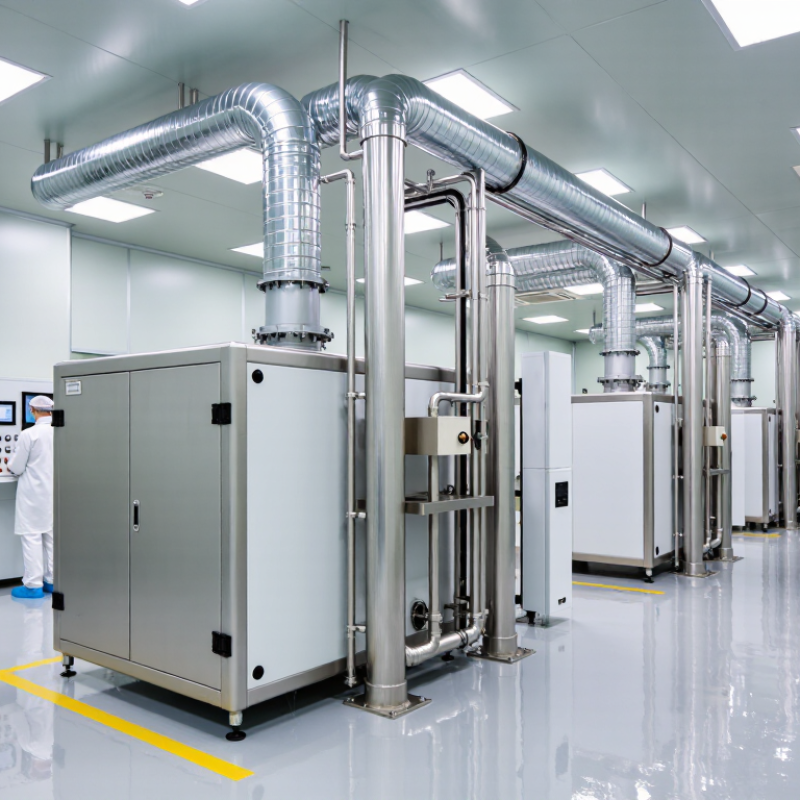
Top China Cleanroom Chiller System Manufacturers?

Cleanroom Chiller Systems: Purpose and Main Components

A cleanroom chiller system removes heat from process equipment and room-conditioning coils, helping maintain stable temperatures. That stability can protect sensitive instruments, materials, and production steps from unwanted thermal changes. Even small swings may affect measurement accuracy or staff comfort. Chilled water also helps air-handling units manage humidity, but the chiller alone cannot guarantee cleanroom conditions. That distinction is easy to miss.

The main components include a refrigeration circuit, a heat exchanger, pumps, pipes, sensors, and a control panel. The evaporator transfers heat from circulating water into the refrigerant. A compressor raises the refrigerant’s pressure, and a condenser releases the captured heat outdoors or into another cooling loop. Pumps move chilled water to cooling coils, where air is cooled before entering the room. Details matter. Poorly insulated pipes can sweat, while weak flow can leave some areas warmer than expected.

Sensors track water and room temperatures, and the controller adjusts operation as demand changes. In practice, engineers should check cooling load, backup needs, maintenance access, and the location of equipment. Chillers are often placed outside the cleanroom, reducing equipment noise and service activity near controlled areas. Still, every layout has trade-offs. A design that looks efficient on paper may be harder to maintain in a cramped plant room, so operating conditions should be reviewed before equipment is selected.

How Cleanroom Conditions Shape Chiller Requirements

Cleanroom conditions shape chiller requirements more than the room’s floor area alone. Particle limits drive filtration and air-change rates, while process equipment, lighting, and staff add heat. ISO 14644-1:2015 sets the ISO Class 5 limit at 3,520 airborne particles per cubic metre for particles 0.5 micrometres or larger. That target affects airflow and, in turn, cooling demand. Small margins matter.

A Lawrence Berkeley National Laboratory cleanroom energy study identifies ventilation and filtration as significant energy loads. Chillers must therefore handle both peak sensible heat and steady cooling for air-handling coils. Temperature stability matters, but humidity control matters too: excess moisture can threaten product quality, while overcooling may cause condensation on coils or duct surfaces. A design based only on equipment nameplates can miss these interacting loads.

For a practical selection, engineers should model room use, occupancy, filtration pressure drop, and seasonal operating schedules. Specify stable chilled-water temperatures, turndown at partial load, and a clear plan for maintenance or equipment failure. Redundancy is useful where even a brief temperature drift could disrupt production. But more capacity is not automatically safer; oversized chillers may cycle frequently and waste energy. This is not a perfect sizing shortcut. Confirm assumptions through commissioning and trend actual room and water temperatures after startup.

China’s Cleanroom Chiller Manufacturing Landscape

China’s cleanroom chiller manufacturing landscape includes equipment builders, refrigeration specialists, and engineering firms that integrate cooling systems into larger facility projects. Their products may serve pharmaceutical rooms, electronics production, laboratories, and other spaces where temperature stability supports process control. The label “cleanroom chiller” alone tells little. Capacity, heat-load profile, water quality, and operating schedule shape the right design.

A practical comparison begins with operating data, not catalogue claims.

Ask how the unit behaves under partial load, whether pumps and compressors have standby capacity, and how alarms reach facility staff. Inspect factory test records, control sequences, maintenance clearances, and spare-parts availability. A 20°C supply-water setpoint, for example, means little without stable return conditions and a measured load. Details matter. Site commissioning should verify temperatures, flow rates, vibration, and alarm response under real conditions.

Manufacturers vary in how much they design in-house and how much they source from partners. That difference can affect lead times, customization, and technical support after installation. Request evidence for stated performance, including test records and clearly defined measurement conditions.

Check references from comparable cleanroom projects, while remembering that a room classification does not automatically prove chiller suitability. Some specifications remain surprisingly vague. That deserves scrutiny. Compare service-response plans and lifecycle costs, not just purchase prices. The strongest choice is one whose engineering assumptions match the facility’s actual load and operating risks.

Criteria for Comparing Chinese Chiller Manufacturers

Top China Cleanroom Chiller System Manufacturers?

Criteria for Comparing Chinese Chiller Manufacturers

Comparing Chinese cleanroom chiller manufacturers takes more than checking cooling capacity and price. Start with documented performance at your actual operating conditions: chilled-water temperatures, ambient heat, part-load hours, and required temperature stability. Ask for certified test data, such as ratings tested under AHRI 550/590, and compare efficiency using the same conditions. A catalog figure alone can be misleading. Numbers need context.

Reliability depends on the whole system. Review compressor and heat-exchanger specifications, control response, noise, maintenance access, and the availability of replacement parts. Request references for cleanrooms with similar heat loads, not just general commercial buildings. The IEA’s The Future of Cooling report projects global space-cooling electricity demand could rise from about 2,000 TWh in 2016 to 6,200 TWh by 2050. That forecast is not a cleanroom-specific estimate, but it reinforces why lifetime energy use deserves careful comparison.

Tips: Ask each supplier for a sample selection report showing design conditions, part-load efficiency, and expected maintenance intervals. Check how assumptions are stated; some may be imperfect, and that should prompt questions, not guesswork. Also compare warranty terms, commissioning support, and response times in writing. A short factory visit can help verify assembly quality, but it cannot replace independent performance evidence.

Top China Cleanroom Chiller System Manufacturers? - Criteria for Comparing Chinese Chiller Manufacturers
Comparison Dimension Data to Compare Evidence to Request Why It Matters Priority
Cooling capacity Net cooling capacity in kW or refrigeration tons at the project’s specified entering-water, leaving-water, and ambient conditions. Selection sheet showing the stated rating conditions, capacity, and any derating at the site design conditions. Capacity figures cannot be compared fairly unless they use the same operating conditions. High
Leaving chilled-water temperature Specified setpoint, allowable operating range, and control stability under the stated load conditions. Technical submittal and control sequence stating the temperature range and measurement method. Cleanroom process and air-handling loads may require stable chilled-water supply conditions. High
Part-load performance Power input and efficiency at full load and representative part-load points, with the test or calculation conditions identified. Certified or documented performance data; clarify whether pumps, fans, and other auxiliaries are included. Chillers often operate below full load, so full-load efficiency alone may not represent annual energy use. High
Temperature and load control Control method, adjustable setpoints, response to load changes, alarms, and available communication interfaces. Control-system description, sequence of operation, and list of supported protocols and points. Controls need to coordinate with the facility’s building-management and process systems. High
Redundancy and availability Available unit configurations, standby strategy, isolation provisions, and the effect of a unit outage on capacity. System schematic and written description of operating and failure modes. Redundancy requirements depend on the facility’s uptime target and the consequences of interrupted cooling. High
Cleanroom and installation compatibility Equipment location, service clearances, heat rejection arrangement, vibration provisions, and any required separation from clean production areas. General arrangement drawings, utility schedule, and installation requirements. Chillers are commonly installed in plant areas; layout and interfaces should suit the site’s contamination-control and maintenance plans. High
Water-side requirements Required flow, pressure drop, water-quality limits, connection sizes, and materials in contact with the water circuit. Hydraulic data, water-quality requirements, and piping and instrumentation diagram. Compatibility with the site’s water system helps avoid inadequate flow, corrosion, scaling, and commissioning delays. High
Refrigerant and regulatory documentation Refrigerant type, stated charge, safety classification, and documentation relevant to the destination market. Equipment data sheet, safety information, and applicable conformity documents for the project location. Refrigerant handling, safety, and regulatory requirements vary by refrigerant and destination market. High
Noise and vibration Sound data with measurement conditions, vibration information, and any proposed attenuation measures. Test data or technical declarations and installation recommendations. These factors affect equipment-room design and nearby occupied or sensitive areas. Medium
Manufacturing quality and traceability Quality-management processes, component traceability, inspection stages, and documented testing procedures. Current certificates where applicable, inspection plans, and sample production or test records. Documented controls make product quality and project acceptance easier to verify. High
Factory and site testing Included factory acceptance tests, witnessed test options, commissioning scope, and acceptance criteria. Test procedure, inspection checklist, sample report, and commissioning responsibility matrix. Agreed test criteria clarify how equipment performance and system interfaces will be checked. High
Service and spare parts Service coverage for the project location, response arrangements, spare-parts availability, and technical-support channels. Service plan, parts list, escalation contacts, and written response-time commitments if offered. Local support and parts logistics can influence maintenance downtime. High
Warranty and commercial scope Warranty duration and exclusions, included accessories, delivery terms, installation boundaries, and payment milestones. Draft warranty terms and a clearly itemized commercial proposal. Consistent scope and terms make quotations more comparable and reduce responsibility gaps. Medium

How to Select a Supplier for a Cleanroom Project

Selecting a cleanroom chiller supplier starts with the room’s operating profile, not a catalogue. Define process heat, air-change rates, humidity limits, peak occupancy, and expansion plans. Ask suppliers to show their load calculation and explain its assumptions. Small details matter.

ISO 14644-1:2015 sets a maximum concentration of 3,520 particles per cubic metre at 0.5 micrometres and larger for ISO Class 5; the ISO Class 7 limit is 352,000. These figures describe airborne cleanliness, not chiller capacity. Still, they help frame the airflow and filtration requirements that influence cooling demand. Don’t let a supplier size equipment from the room’s floor area alone.

Compare quoted capacity and efficiency at your actual chilled-water and condenser-water temperatures. Request part-load performance, controls sequences, alarm records, maintenance intervals, and local service response times. Ask how the system handles a chiller failure during production. A perfect-looking proposal can hide weak assumptions. I would also check whether the quoted redundancy matches the project’s real downtime risk, rather than paying for capacity nobody needs.

ISO Cleanroom Particle Limits: A Facility Requirement to Consider When Selecting a Chiller Supplier

The chart shows the maximum permitted concentration of airborne particles ≥0.5 μm per cubic metre for selected ISO cleanroom classes. Cleanroom classification is one part of project requirements; when evaluating chiller suppliers, also confirm cooling capacity, temperature stability, redundancy, and compatibility with the facility’s operating conditions.

Source: ISO 14644-1:2015, airborne particle concentration limits.

All search results