Superabrasive

Why Choose an Asparagus Optical Sorter?

Choosing an Asparagus Optical Sorter is a practical decision about quality, labor, and consistency. Fresh asparagus arrives with uneven lengths, bent tips, soil marks, bruises, and color differences. These details can change within a single harvest day. A reliable sorter uses cameras, sensors, and controlled air jets to identify unwanted pieces quickly. It can inspect more product than tired human eyes, especially during long shifts.

Dr. Jan-Willem van der Poel, an asparagus-processing and optical-sorting consultant, describes the priority clearly: “A good sorter protects product consistency before defects become customer complaints.” His observation reflects a common processing challenge. Speed alone is not enough. The machine must recognize delicate spears without damaging them. It should separate white, green, and purple asparagus according to the processor’s specifications. Its software should also support adjustments when lighting, field conditions, or crop maturity changes.

An Asparagus Optical Sorter can reduce repetitive inspection work and improve packing accuracy. It may also lower waste when settings are carefully calibrated. Still, no machine is perfect. Very small defects can escape detection, while unusual spears may be rejected unnecessarily. This is where operator experience matters. Staff must review rejected product, inspect sensor performance, and refine the sorting rules. Clean lenses matter. Stable feeding matters more than many buyers expect.

The best choice depends on throughput, asparagus varieties, defect types, maintenance support, and available floor space. A demonstration using real samples is essential. Brochures cannot show every challenge. A sorter that performs well on clean laboratory samples may behave differently during a muddy harvest. Careful testing reveals the difference.
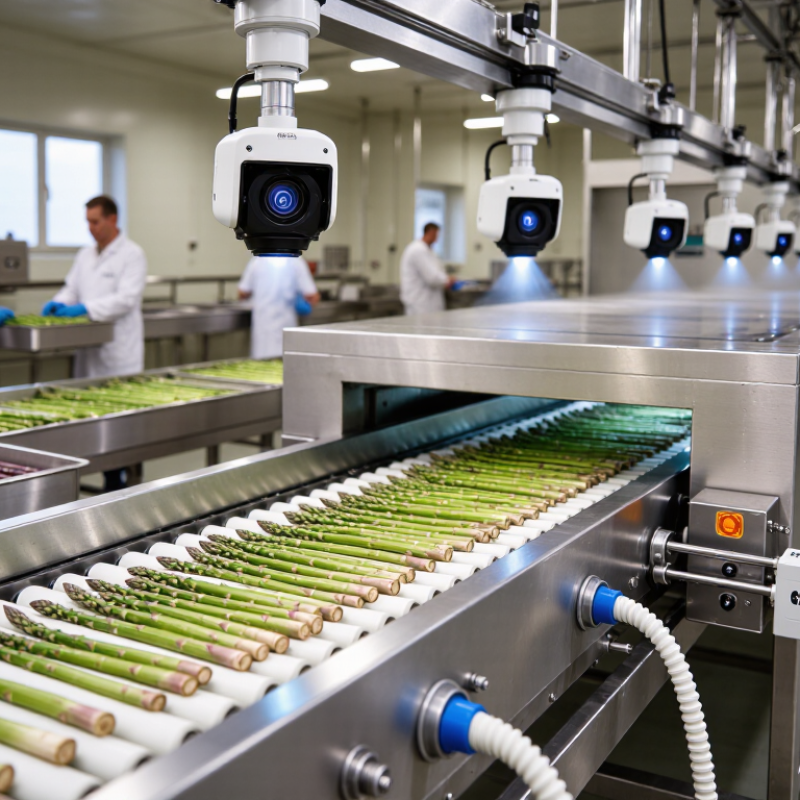
Why Choose an Asparagus Optical Sorter?

Asparagus Optical Sorter: Definition and Core Sorting Principles

Why Choose an Asparagus Optical Sorter?

An asparagus optical sorter is an automated system for inspecting and separating asparagus spears. It combines cameras, controlled lighting, sensors, and software. As spears move along a conveyor, the system captures images from several angles. It checks color, diameter, length, shape, and visible defects. Some systems may also use near-infrared sensing for internal or surface differences. The core principle is simple: detect measurable characteristics, compare them with set quality rules, and direct each spear into the correct stream.

The process starts with consistent feeding. Spears must remain spaced and visible. Cameras then analyze each item within milliseconds. Software identifies acceptable green color, uneven tips, bruising, soil marks, or excessive curvature. A timed air jet or mechanical gate removes items that fail the selected criteria. Accurate timing is essential. A small delay can send a good spear into the reject line. In real processing environments, operators regularly check samples and adjust settings as crop conditions change.

No sorter is perfect.

Field experience shows that wet surfaces, overlapping spears, and unusual lighting can reduce accuracy. A setting that works during a dry morning may perform poorly after washing. Operators should verify results with physical inspections, not trust automation blindly. Proper cleaning, calibration, and recorded quality checks improve reliability. Choosing an optical sorter makes sense when producers need stable grading, faster throughput, and less dependence on tiring visual inspection. It still requires trained people and honest performance testing.

How the Machine Identifies and Separates Asparagus

An asparagus optical sorter uses cameras, controlled lighting, and software to inspect each spear in real time. It studies color, shape, diameter, length, and visible surface damage. Green asparagus appears differently from pale stems or soil-marked pieces. The system converts these visual differences into sorting decisions.

The process starts with a steady conveyor flow. Each spear passes beneath a camera at a known position. Image-processing software checks its outline and surface condition. It can detect crooked spears, broken tips, dark spots, and unwanted foreign material. When a piece fails the selected standard, a timed air jet pushes it into another channel. Good asparagus continues forward with minimal contact.

Accuracy depends on practical setup, not software alone. Workers must keep lenses clean and adjust lighting when product moisture changes. Calibration also matters after a crop variety or conveyor speed changes. No system is perfect. A pale blemish may resemble natural skin, while a wet surface can hide damage. For this reason, experienced operators review samples and compare machine decisions with manual checks. That feedback improves settings and reduces unnecessary rejection. A reliable sorter does more than separate product; it makes its decisions measurable, repeatable, and easier to verify.

Key Benefits for Asparagus Processing Operations

Why Choose an Asparagus Optical Sorter?

Key Benefits for Asparagus Processing Operations

An asparagus optical sorter examines each spear as it moves along the processing line. Cameras detect color changes, bruises, broken tips, foreign material, and uneven shapes. This supports faster quality decisions than manual inspection alone. In daily operations, workers can focus on packing, equipment checks, and product handling. The result is a more balanced workflow during peak harvest periods.

Consistency matters.

Sorting accuracy helps processors meet grade requirements across different shifts. It can remove pale, damaged, or over-mature spears before packing. This protects the appearance of retail bundles and reduces customer complaints. A cleaner product stream may also improve yield by separating acceptable spears from clear defects. Optical data can reveal recurring problems, such as field damage or rough transfer points.

Still, the system is not magic. Dust, wet surfaces, crowded conveyors, and unusual varieties can affect performance. Regular cleaning, correct lighting, and careful calibration remain essential. Staff experience is equally important because operators must review questionable results and adjust settings responsibly. A short trial with real harvest samples often provides more useful evidence than a sales claim. Processors should measure rejection accuracy, usable recovery, labor changes, and maintenance time before making a final decision.

Why Choose an Asparagus Optical Sorter? - Key Benefits for Asparagus Processing Operations

Processing Dimension Relevant Asparagus Requirement How Optical Sorting Helps Operational Benefit
Diameter grading Asparagus is commonly marketed in diameter classes such as 6–9 mm, 9–12 mm, 12–16 mm, and above 16 mm, depending on the applicable customer or market specification. Camera-based measurement can classify individual spears by visible diameter and route them into defined size grades. More consistent packs, fewer size-mixing errors, and better alignment with customer specifications.
Length classification Retail and foodservice products may require controlled spear lengths or trimmed lengths. Vision systems can identify spear position, measure visible length, and separate products outside a configured range. Improves pack uniformity and reduces manual checking at the grading line.
Color grading Green, white, and purple asparagus require different color specifications. Green asparagus may also show pale or uneven coloration. RGB imaging can assess dominant color, color uniformity, and visible discoloration. Supports color-based product separation and helps maintain a consistent visual appearance.
Tip quality Tips are high-value presentation areas and may be affected by damage, opening, browning, or deformation. High-resolution imaging can inspect the tip area for visible physical defects and abnormal shape. Protects premium grades and reduces the chance that visibly damaged tips enter finished packs.
Surface defects Common visible issues include bruising, scars, cuts, discoloration, insect damage, and soil residue. Configured image models can detect differences in color, texture, shape, and surface appearance. Creates repeatable defect rules and reduces dependence on subjective visual inspection.
Foreign-material control Field-harvested produce can contain leaves, stems, stones, soil clumps, or packaging fragments. Optical systems can identify objects that contrast with asparagus in color, shape, or reflectance. Adds a non-contact inspection step before packing or further processing.
Throughput consistency Harvest volumes and incoming quality can vary significantly by field, cultivar, weather, and harvest timing. Automated inspection applies programmed sorting rules continuously while product moves through the line. Helps maintain a stable grading process during peak intake periods and changing product conditions.
Labor allocation Manual sorting requires operators to perform repetitive inspection and separation tasks over extended shifts. Automation performs the first-pass classification, allowing personnel to focus on quality verification, line control, and exception handling. Reduces repetitive inspection work and supports more consistent decisions across shifts.
Hygiene and product handling Asparagus is a fresh product that can be vulnerable to bruising and unnecessary handling. Non-contact imaging evaluates product appearance without requiring each spear to be manually handled. Can reduce handling points and help protect product appearance when the line is correctly configured.
Traceability and quality data Processors need visibility into grade distribution, defect rates, rejected quantities, and changes in incoming quality. Industrial sorting systems can record counts and classification results when connected to suitable line-control or data systems. Provides objective process data for production reviews, quality control, and supplier feedback.
Flexible quality recipes Different customers may set different tolerances for diameter, length, color, tip condition, and visible defects. Sorting parameters can be configured for different product grades, pack formats, and acceptance criteria. Makes it easier to switch between specifications without rebuilding the entire manual inspection process.

Note: Actual accuracy, capacity, labor impact, and return on investment depend on asparagus variety, product presentation, line speed, defect definitions, lighting, calibration, and equipment configuration.

Important Features to Evaluate Before Choosing a Sorter

Why Choose an Asparagus Optical Sorter?

Important Features to Evaluate Before Choosing a Sorter

Choosing an asparagus optical sorter should begin with product reality, not impressive brochures. Inspect the machine using your own spears, including thin, curved, bruised, and soil-marked samples. High-resolution cameras should detect color variation, open tips, broken ends, and foreign material. Near-infrared sensing can add value when surface appearance hides internal quality differences. Ask for measured false-reject and miss rates. Not promises.

Line capacity also needs careful testing. A conveyor running quickly may reduce inspection accuracy when spears overlap. Check belt spacing, lighting stability, reject timing, and cleaning access during a full-shift trial. The FAO’s State of Food and Agriculture estimates that 14% of food is lost between harvest and retail. Better sorting cannot remove every loss, but it can help separate saleable produce from defects earlier. The UNEP Food Waste Index 2024 reports that 1.05 billion tonnes of food were wasted in 2022. That figure makes efficiency important, though a sorter alone is not the answer.

Evaluate software controls, data recording, operator training, and maintenance support. A reliable system should explain why products are rejected, not simply eject them. I would also question laboratory results collected under perfect conditions. Wet asparagus, changing daylight, and mixed sizes can expose weaknesses quickly. Test again after cleaning, calibration, and long operating periods. The best choice is the sorter that remains accurate when the crop is inconvenient.

Why Choose an Asparagus Optical Sorter?

Important features to evaluate before choosing a sorter. The chart presents a practical procurement weighting model for comparing optical sorting systems used in asparagus processing.

Detection accuracy and gentle product handling are critical for preserving asparagus quality, while throughput, cleaning efficiency, changeover time, and data connectivity influence operating cost and production flexibility.

Installation, Maintenance, and Processing Considerations

Why Choose an Asparagus Optical Sorter?

An asparagus optical sorter can inspect each spear at production speed. It detects color changes, broken tips, bruising, and unwanted material. However, performance depends heavily on installation and product preparation. A poorly leveled frame may create vibration, reducing image accuracy. The machine should stand on a stable surface, away from excessive dust and water spray. Operators also need clear access to cameras, air lines, reject chutes, and sanitation points.

Keep the feeding system even. Spears should move in separated layers, not tangled piles. Wet surfaces and overlapping stems can confuse the sensors. Adjustable lighting helps maintain consistent readings during day and night shifts. During commissioning, technicians should test different varieties, sizes, and moisture levels. Record accepted and rejected samples. Small calibration errors can become expensive waste.

Maintenance requires discipline. Clean camera covers with approved materials, inspect air filters, and check reject valves regularly. A blocked nozzle may leave defective spears on the clean belt. It sounds minor. It is not. Review calibration after product changes and unexpected weather conditions. In practice, no setting works forever. Some teams adjust sensitivity too aggressively, then lose good asparagus. A slower, documented trial is often better. Operators should also compare machine results with manual inspections, because technology still needs informed human judgment.

All search results