Global sourcing teams choose pipe against more than a purchase price. Welded Pipe can offer consistent dimensions, broad availability, and practical options for infrastructure, construction, and process systems. Those benefits depend on the specification, manufacturing controls, and the supplier’s ability to document each production lot. A low quotation alone proves little.
The World Steel Association reported 1,892.2 million tonnes of crude steel production worldwide in 2023. This figure describes the scale of the steel supply base, not welded-pipe output, and that distinction matters. For buyers, it signals a large industrial ecosystem while leaving the real questions unanswered: Which grade is available? How are welds inspected? Can the mill provide traceable test records? Shortcuts here can become costly delays at the receiving dock.
A useful global sourcing assessment compares forming method, wall thickness, coating, dimensional tolerances, and inspection requirements. It also checks delivery terms, packaging, and the supplier’s experience with the destination market. Standards such as applicable ASTM or API specifications may help define acceptance criteria, but the correct standard depends on service conditions and project requirements. Ask for mill test certificates and inspection evidence before approving a purchase. Then verify that documents match the delivered pipe. Simple, but often missed. Even careful buyers can overlook a detail when schedules tighten; that is worth admitting. Welded Pipe is not automatically the right choice for every application. The strongest sourcing decision weighs lifecycle needs, technical evidence, and dependable communication—not price alone.
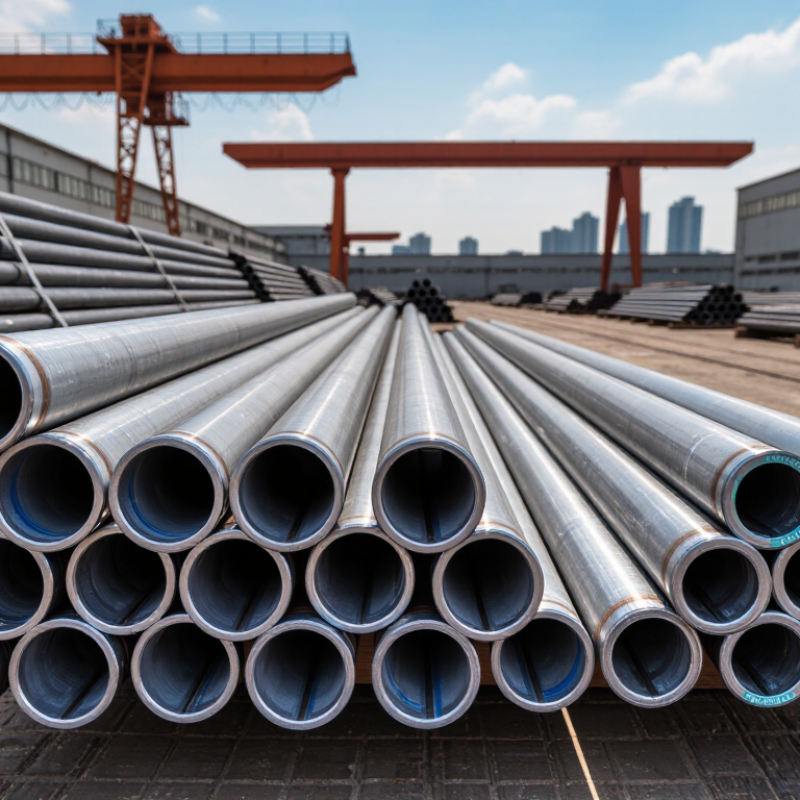
Why Choose Welded Pipe for Global Sourcing?
Welded pipe starts with steel strip or plate, not a seamless billet. The material is leveled, formed, and joined along a controlled seam. Electric resistance welding uses heat from electrical resistance and pressure. Large-diameter pipe often uses submerged arc welding, sometimes with internal and external passes. The seam is then inspected, sized, and cut to length. Simple in principle. Not always simple in production.
According to the World Steel Association, global crude steel production reached about 1.89 billion tonnes in 2023. That large supply base supports broad access to welded pipe feedstock across major manufacturing regions. Production route matters, though. Strip chemistry, forming accuracy, welding speed, and heat input can affect seam strength and dimensional stability. A low purchase price may hide higher inspection or installation costs.
Professional buyers commonly check chemical certificates, tensile results, hydrostatic testing, weld inspection records, and traceability markings. Requirements may reference standards such as ASTM A53, ASTM A106, or API 5L, depending on service conditions. Wall thickness deserves careful attention. A pipe can meet outside diameter requirements yet fail a project’s pressure or corrosion expectations. In practice, global sourcing works best when drawings, tolerances, coating needs, and inspection levels are agreed before production. I have seen specifications remain vague at the purchasing stage. That usually creates avoidable questions later. Data should be reviewed, not merely collected.
Why Choose Welded Pipe for Global Sourcing?
How Standards Shape Welded Pipe Quality
Welded pipe can support global projects when its quality is defined before production begins. Standards turn broad expectations into measurable requirements. They specify dimensions, steel grades, weld methods, pressure ratings, and testing procedures. Common frameworks include ASTM, ASME, EN, and API requirements. Each serves different applications, so a familiar standard is not automatically suitable.
A reliable supplier should provide heat numbers, mill certificates, welding procedure records, and inspection results. These documents connect the finished pipe to its raw material and production history. Visual inspection can identify surface defects, poor alignment, or uneven weld profiles. Non-destructive testing may reveal hidden flaws through radiography, ultrasound, or magnetic examination. The correct method depends on the pipe grade and service conditions.
Small details matter.
For global sourcing, buyers should compare the purchase specification with the required standard clause by clause. Tolerances, coating systems, end preparation, and marking rules can differ between regions. Independent inspection adds confidence, especially when the order crosses several regulatory environments. However, paperwork alone cannot guarantee performance. A certificate may be complete yet still need verification. I have seen sourcing plans focus heavily on price and overlook traceability. That is an expensive weakness. Standards reduce uncertainty, but they do not remove the need for competent engineering judgment, clear communication, and practical inspection.
| Standard or Specification | Primary Product Scope | Typical Material Grades | Common Manufacturing Routes | Key Quality Controls | Typical Global Sourcing Applications | Purchasing Significance |
|---|---|---|---|---|---|---|
| ASTM A53/A53M | Steel pipe for mechanical and pressure applications, available in welded and seamless forms. | Grade A Grade B | Electric-resistance-welded or furnace-butt-welded pipe, depending on product type and size. | Chemical and tensile requirements, bend or flattening testing, hydrostatic or nondestructive electric testing, and dimensional inspection. | Water, air, steam, structural and general industrial piping. | Useful for general-purpose procurement, but the buyer should confirm pipe type, schedule, end finish, coating, and test option before ordering. |
| ASTM A106/A106M | Seamless carbon steel pipe for high-temperature service. | Grade A Grade B Grade C | Seamless manufacture; it is not a welded-pipe specification. | Chemical composition, tensile properties, hydrostatic testing, dimensional checks, and additional inspection where specified. | High-temperature piping, refinery services, power generation and process systems. | Important comparison reference: welded pipe should not be substituted for A106 without confirming design temperature, joining method and the governing project code. |
| API 5L / ISO 3183 | Line pipe for pipeline transportation systems in the petroleum and natural gas industries. | L245 / X35 L290 / X42 L360 / X52 L415 / X60 L450 / X65 | Seamless, longitudinally welded or helically welded pipe, subject to the selected product specification level and order requirements. | Chemical analysis, tensile and bend testing, weld inspection, hydrostatic testing, dimensional control, traceability and documented inspection results. | Onshore and offshore pipeline systems, gathering lines and transmission pipelines. | Specify PSL1 or PSL2, grade, pipe end, outer diameter, wall thickness, sour-service requirements, impact testing and supplementary NDE when applicable. |
| EN 10217 | Welded steel tubes for pressure purposes, with different parts covering different material groups and service conditions. | P195TR1 P235TR2 P265GH | Longitudinally welded or other permitted welded production routes, depending on the applicable part and product category. | Specified chemical and mechanical properties, weld quality requirements, hydrostatic or nondestructive testing, and dimensional inspection. | Pressure equipment, boiler systems, heat exchangers and industrial process piping. | Confirm the applicable EN 10217 part because the required testing and material designation depend on service temperature and product category. |
| EN 10219 | Cold-formed welded structural hollow sections made from non-alloy and fine-grain steels. | S235JRH S275J0H S355J2H | Cold-formed longitudinally welded circular, square or rectangular hollow sections. | Yield strength, tensile strength, elongation, impact properties where designated, weld quality and dimensional tolerances. | Steel frames, columns, trusses, machinery and general structural fabrication. | Suitable when the project is designed around structural hollow sections rather than pressure-piping dimensions. |
| ASME B36.10M | Standardized dimensions for welded and seamless wrought steel pipe. | Dimensional standard; it does not define a steel grade by itself. | Applies to both welded and seamless pipe dimensions. | Outside diameter, nominal pipe size, wall thickness, schedule and approximate mass per unit length. | Process piping, utility piping and engineering projects using NPS-based dimensions. | Use together with a material and manufacturing specification, such as ASTM A53 or API 5L; it is not a standalone quality certificate. |
| ISO 9001 | Quality management system requirements for organizations in any industry. | Not a product grade or pipe material designation. | Applies to production, purchasing, inspection, calibration, document control and corrective-action processes. | Process control, internal audits, controlled records, nonconformity management and continual improvement. | Global supplier qualification and multi-country sourcing programs. | Certification supports system consistency, but it does not replace product testing, material certificates or inspection against the pipe specification. |
| Weld Quality and NDE Requirements | Project-specific controls used to verify weld integrity and production consistency. | Depends on the governing pipe standard, design code and purchaser specification. | Longitudinal or helical welding using processes such as ERW, HFW, SAW or other qualified methods. | Visual inspection, dimensional checks, hydrostatic testing, ultrasonic testing, radiographic testing, weld qualification and calibration control where specified. | Critical pipeline, pressure, structural and industrial applications. | State the NDE method, coverage, acceptance criteria, sampling level and reporting format in the purchase order to avoid ambiguous compliance. |
Welded pipe can help buyers balance availability, cost, and project requirements across international supply chains. Its manufacturing process forms steel strip or plate into a tube and joins the seam, supporting consistent dimensions and a broad range of sizes. The World Steel Association reported 1.89 billion tonnes of global crude steel production in 2023, reflecting the scale of the supply base behind many steel products. However, output alone does not guarantee a suitable pipe: grade, wall thickness, weld inspection, and traceability still matter.
For sourcing teams, standardized specifications can make supplier comparisons clearer and reduce avoidable mismatches at delivery. Welded pipe may also be practical when projects need repeatable lengths or larger diameters, depending on the product standard and service conditions. UNCTAD’s Review of Maritime Transport notes that more than 80% of world merchandise trade by volume moves by sea, so shipment planning matters. A carefully packed bundle, protected bevels, and legible identification can prevent small handling issues from becoming costly delays. Not every application is a fit; confirm pressure, corrosion, and temperature requirements with qualified engineers.
Welded pipe often earns attention because it balances cost, availability, and practical performance. In many projects, its lower production cost creates room for better coatings, testing, or freight planning. That advantage is not automatic. Diameter, wall thickness, steel grade, and order volume can change the final price quickly. A low quotation may exclude inspection, packing, or inland transport.
Mill location matters. Regional production can shorten delivery routes and reduce exposure to port congestion. However, nearby supply does not always mean faster supply. I have seen available stock delayed by missing certificates or incorrect dimensions. Buyers should confirm production capacity, inventory status, lead time, and document readiness before placing an order. A clear inspection plan also helps prevent costly rework.
Logistics deserves equal attention. Welded pipe needs suitable bundling, moisture protection, and lifting arrangements. Poor packing can damage coating edges during handling. Long-distance shipments may require several transfers, so bundle weight and loading sequence should be checked early. Consolidated cargo can lower freight costs, but it may add waiting time. Full-container shipping can move faster, although unused space may weaken the cost benefit.
A reliable sourcing decision compares landed cost, not only pipe price. It also reviews quality records, traceability, communication, and after-sales response. Spreadsheets look precise. Reality is less tidy. Weather, customs checks, and revised project schedules can still disrupt a careful plan. That is why flexible delivery windows and honest supplier communication remain valuable across markets.
Why Choose Welded Pipe for Global Sourcing?
A welded pipe supplier should offer more than an attractive quotation. Evaluate the mill’s production experience, welding process, and quality controls. Ask how it handles edge preparation, heat input, weld inspection, and dimensional checks. These details affect pipe strength, alignment, and installation time.
Request recent mill test certificates, inspection records, and traceability documents. Each bundle should connect clearly to its heat number, production date, and test results. Confirm whether the supplier performs ultrasonic, radiographic, or hydrostatic testing according to your project standard. A clean certificate folder is useful, but it is not proof by itself. I have seen documents look perfect while marking on the actual pipe was incomplete. Physical verification still matters.
Tips: Check sample pipes before placing a large order. Measure wall thickness at several points, inspect the weld bead under good lighting, and review packing photos before shipment. Confirm steel grade, outside diameter, length tolerance, coating requirements, and export documents in writing. Ask for a realistic lead time, not an optimistic promise. Visit the facility when possible, or arrange an independent inspection. Suppliers may resist this step, but reliable producers usually explain their process clearly. One weakness remains: remote evaluation cannot reveal every production habit. Build in inspection points, keep communication records, and compare performance after delivery.
| Cookie | Duration | Description |
|---|---|---|
| cookielawinfo-checkbox-analytics | 11 months | This cookie is set by GDPR Cookie Consent plugin. The cookie is used to store the user consent for the cookies in the category "Analytics". |
| cookielawinfo-checkbox-functional | 11 months | The cookie is set by GDPR cookie consent to record the user consent for the cookies in the category "Functional". |
| cookielawinfo-checkbox-necessary | 11 months | This cookie is set by GDPR Cookie Consent plugin. The cookies is used to store the user consent for the cookies in the category "Necessary". |
| cookielawinfo-checkbox-others | 11 months | This cookie is set by GDPR Cookie Consent plugin. The cookie is used to store the user consent for the cookies in the category "Other. |
| cookielawinfo-checkbox-performance | 11 months | This cookie is set by GDPR Cookie Consent plugin. The cookie is used to store the user consent for the cookies in the category "Performance". |
| viewed_cookie_policy | 11 months | The cookie is set by the GDPR Cookie Consent plugin and is used to store whether or not user has consented to the use of cookies. It does not store any personal data. |