Choosing the right China fabrication tools can shape production quality, delivery stability, and long-term operating costs. Global buyers often compare prices first, yet the cheapest quotation may hide weaker materials, limited testing, or expensive replacement parts. A reliable decision requires more than a polished catalog.
In practical sourcing work, buyers should examine tool construction, cutting accuracy, surface treatment, warranty terms, and spare-parts availability. For example, a fabricator may need a laser cutter that maintains stable alignment during an eight-hour shift, not merely a machine with impressive power ratings. Check calibration records, electrical specifications, operator protections, and compatibility with local workshop conditions. Safety documentation also deserves careful review. Fit matters.
Manufacturers with clear quality systems, traceable production records, and responsive technical teams usually offer stronger purchasing confidence. Certifications such as ISO 9001 can support evaluation, but they should not replace factory audits, sample testing, and reference checks. A video tour helps, though an independent inspection can reveal inconsistent welding, poor packaging, or unclear labeling. Details matter.
My own early comparisons were too focused on unit price. That shortcut fails. Freight damage, software limitations, and delayed service can quickly change the real cost. Buyers should therefore build a total-cost model and test communication before placing a large order. This guide examines practical China fabrication tools for global applications, while recognizing that no supplier, specification, or market is perfect. The goal is a balanced framework based on evidence, technical judgment, and lessons from real procurement decisions.
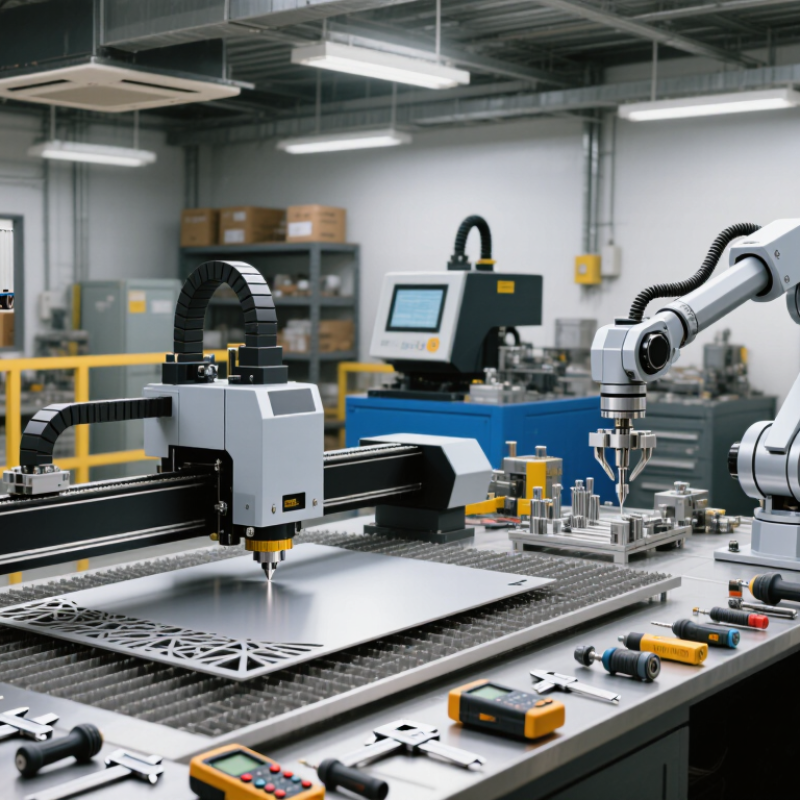
China’s fabrication-tool sector covers CNC milling centers, turning machines, laser cutters, press brakes, welders, and additive systems. These tools serve automotive components, construction hardware, energy equipment, and precision electronics. CNC machines remove material with controlled accuracy, while laser cutters create clean profiles in steel, aluminum, and thinner sheet metals. Press brakes then shape those profiles into enclosures, brackets, and frames. The workflow is practical.
The International Federation of Robotics reported 276,288 industrial robot installations in China during 2023, representing about 51% of global installations. This figure reflects a strong automation base around fabrication plants. Automated loading, welding, and inspection can improve repeatability, but they do not eliminate process risks. Poor fixturing still creates alignment errors. Fit still matters.
Additive manufacturing has a narrower role but supports prototypes, lightweight parts, and complex internal channels. The Wohlers Report 2024 valued the global additive manufacturing industry at 20.035 billion dollars in 2023, after 13.5% growth. Buyers should match the process to material, tolerance, batch size, and after-sales support. In practical sourcing reviews, sample parts reveal more than polished brochures. A test cut may expose heat distortion, rough edges, or unstable software. That is easy to miss. Insist on dimensional records, maintenance guidance, electrical compatibility, and documented operator training before approving large-volume production.
Global buyers usually compare CNC, laser, 3D printing, and metalworking equipment by price. That is too narrow. CNC machining suits repeatable parts, tight tolerances, and materials such as aluminum, steel, and engineering plastics. Laser systems cut sheet metal quickly, especially when profiles change often. The choice depends on thickness, edge quality, batch size, and operator skill.
The numbers show why additive manufacturing deserves attention. The Wohlers Report 2024 valued the global additive manufacturing industry at about $20 billion in 2023, with continued double-digit growth. 3D printing works well for prototypes, complex channels, and low-volume customization. However, surface finishing can add labor and cost. It is not automatically faster. A 2024 industrial robotics report from the International Federation of Robotics recorded more than 540,000 new industrial robot installations in 2023. This supports wider automation, but integration still requires reliable programming and maintenance.
Traditional metalworking equipment remains practical for drilling, milling, bending, and forming. Buyers should request test samples, tolerance records, electrical specifications, and service response times. Ask for measured results, not attractive claims. A factory tour or live video test can reveal vibration, poor guarding, and inconsistent cutting. Small details matter. I have seen purchasing teams compare spindle power while ignoring dust extraction and replacement-part access. That mistake becomes expensive after installation. Report figures also vary by methodology, so buyers should verify definitions, regional coverage, and production assumptions before approving a quotation.
| Comparison Dimension | CNC Machining Equipment | Fiber Laser Cutting Equipment | Metal 3D Printing Equipment | Conventional Metalworking Equipment |
|---|---|---|---|---|
| Core Process | Subtractive Computer-controlled milling, turning, drilling, and boring remove material from a solid workpiece. |
Thermal Cutting A focused laser beam melts or vaporizes material while assist gas clears the cut zone. |
Additive Metal powder is fused layer by layer, commonly through laser powder-bed fusion or directed-energy deposition. |
Mechanical Forming Manual or automated cutting, turning, drilling, bending, stamping, and shaping using conventional machines. |
| Best-Suited Materials | Aluminum, carbon steel, stainless steel, brass, copper, titanium, engineering plastics, and selected superalloys. | Carbon steel, stainless steel, aluminum, brass, copper, galvanized sheet, and selected coated metals. | Stainless steel, tool steel, aluminum alloys, titanium alloys, nickel alloys, and cobalt-chromium alloys. | Carbon steel, stainless steel, aluminum, brass, copper, cast iron, and many engineering plastics, depending on tooling. |
| Typical Dimensional Accuracy | Approximately ±0.01 to ±0.05 mm for well-maintained equipment and suitable workholding. | Approximately ±0.05 to ±0.20 mm, depending on material thickness, machine condition, heat input, and geometry. | Approximately ±0.05 to ±0.15 mm after process optimization; as-built accuracy is generally lower than finished CNC parts. | Approximately ±0.05 to ±0.20 mm for precision operations; manual work may have wider variation. |
| Typical Surface Finish | About Ra 0.8–3.2 µm for common milled or turned surfaces; polishing and grinding can improve this further. | Cut edges commonly range from about Ra 3.2–12.5 µm, depending on material, thickness, gas, and cutting parameters. | As-built surfaces commonly range from about Ra 6.3–25 µm and normally require support removal or finishing. | About Ra 1.6–6.3 µm for common machined operations; forming and manual processes vary significantly. |
| Typical Work Envelope | From compact benchtop machines to machining centers exceeding 1,000 mm in travel; exact capacity depends on axis configuration. | Common sheet-bed sizes include approximately 1,500 × 3,000 mm and 2,000 × 4,000 mm, with larger beds also available. | Common metal powder-bed build volumes are approximately 100–400 mm per axis; larger directed-energy systems offer greater scale. | Ranges from small manual machines to large lathes, presses, saws, and bending machines designed for heavy or oversized workpieces. |
| Typical Sheet or Part Thickness | Controlled by tool access and machine power rather than a fixed sheet limit; several millimeters to hundreds of millimeters are possible. | Typical fiber-laser applications cover thin foil through approximately 20–30 mm steel, with capacity dependent on laser power and material. | Common layer thicknesses are approximately 20–60 µm for powder-bed fusion; final part size is limited by the build chamber. | Thin sheet through heavy plate and bar stock can be processed, depending on the specific saw, press, lathe, mill, or forming machine. |
| Minimum Feature Capability | Small pockets, holes, ribs, threads, and contours are possible, but tool diameter, rigidity, and chip evacuation impose limits. | Fine slots and small profiles are possible; kerf width and heat-affected areas limit very small features. | Complex internal channels and lattice structures are possible, but powder removal, support design, and minimum wall thickness are critical. | Feature size depends strongly on the tool, operator, workholding, and process; complex internal geometry is generally more difficult. |
| Production Volume Fit | Excellent for prototypes, small batches, and repeat production when fixtures and toolpaths are optimized. | Excellent for prototypes and high-volume sheet-metal cutting, especially for repeated 2D profiles. | Best for prototypes, low-volume production, customized parts, and geometries that are difficult to manufacture conventionally. | Suitable for prototypes, repair work, maintenance, job-shop production, and operations where automation is not essential. |
| Material Utilization | Moderate; material is removed as chips, although nesting and machining strategy can reduce waste. | High for well-nested sheet layouts; narrow kerf width reduces material loss, but skeleton scrap remains. | High for near-net-shape production, although unused powder may require sieving, refreshing, or controlled disposal. | Ranges from low to moderate, depending on whether the operation cuts, forms, drills, or removes large amounts of stock. |
| Programming and Setup | Requires CAD/CAM programming, tool selection, workholding, feeds, speeds, and process verification. | Requires CAD nesting, cutting parameters, gas selection, focus control, and piercing strategy. | Requires build orientation, support generation, parameter selection, powder handling, and thermal management. | Usually requires less software preparation, but skilled setup, tooling selection, measurement, and operator judgment are important. |
| Post-Processing Requirements | Deburring, cleaning, inspection, heat treatment, anodizing, plating, painting, or polishing may be required. | Deburring and removal of dross or oxide may be required; bending, welding, grinding, or coating may follow. | Support removal, stress relief, heat treatment, powder removal, machining, blasting, polishing, or inspection is commonly required. | Deburring, surface finishing, heat treatment, cleaning, or coating may be required depending on the operation. |
| Relative Production Speed | Moderate; speed depends on material removal rate, part complexity, tooling, and the number of setups. | Fast for flat sheet profiles and repetitive cutting; thick materials, reflective metals, and intricate patterns reduce throughput. | Slow to moderate; production time includes layer deposition, cooling, support removal, and finishing. | Moderate to fast for simple operations, but manual handling and multiple setups can limit throughput. |
| Labor and Skill Requirements | Requires trained programmers, operators, tooling specialists, and quality personnel for reliable repeatability. | Requires trained operators for nesting, optics, assist gas, nozzle condition, machine safety, and maintenance. | Requires specialized knowledge of powder safety, process parameters, build preparation, post-processing, and quality assurance. | Requires experienced machinists or fabricators, especially for manual measurement, setup, and process control. |
| Energy and Facility Considerations | Requires electrical power, coolant management, chip collection, ventilation, and adequate floor space. | Requires electrical power, assist-gas supply, fume extraction, cooling, optical protection, and fire-risk controls. | Requires controlled powder handling, ventilation, inert-gas management, filtration, fire protection, and dedicated post-processing space. | Requires electrical power, ventilation, lifting equipment where applicable, cutting-fluid management, and safe material storage. |
| Main Advantages | High accuracy, broad material compatibility, strong surface quality, repeatability, and suitability for functional end-use parts. | Fast sheet processing, narrow kerf, low mechanical force, flexible nesting, and efficient production of 2D profiles. | Complex geometry, lightweight structures, internal channels, part consolidation, and reduced need for dedicated tooling. | Lower technological complexity, flexible repair capability, accessible maintenance, and suitability for basic fabrication tasks. |
| Main Limitations | Tool access can restrict internal geometry; setup time, cutting tools, chips, and workholding add cost and complexity. | Primarily suited to 2D or near-2D profiles; heat-affected zones, dross, reflection, and plate distortion require control. | High process complexity, limited build volume, powder-handling risks, slower throughput, and substantial post-processing. | Lower automation and repeatability than advanced CNC or laser systems; complex geometries may require several operations. |
| Best Choice for Global Buyers | Precision components, tight-tolerance parts, prototypes, fixtures, housings, shafts, and repeat production. | Sheet-metal panels, brackets, enclosures, signs, flat profiles, and high-volume 2D cutting work. | Lightweight aerospace-style structures, medical or engineering prototypes, customized components, and topology-optimized parts. | Maintenance, repair, general fabrication, basic workshops, low-volume jobs, and applications requiring broad manual flexibility. |
| Key Checks Before Purchase | Axis travel, spindle speed, controller compatibility, tool magazine, repeatability, workholding, service support, and export documentation. | Laser power, bed size, source wavelength, cutting head, assist-gas consumption, extraction, safety enclosure, and spare-parts availability. | Build volume, compatible alloys, layer thickness, inert-gas system, powder recovery, software workflow, certification, and inspection capability. | Machine rigidity, capacity, motor power, tooling availability, measurement systems, operator training, guarding, and maintenance requirements. |
Global buyers should evaluate fabrication tools beyond catalog photos and quoted prices. In my experience, reliable suppliers provide inspection records, material certificates, and clear tolerance data. A tool with ±0.02 mm accuracy may suit precision parts, but only when measurement methods are documented. Ask whether inspections use calibrated coordinate measuring machines, micrometers, or visual checks. These details reveal the real quality level.
Material selection also affects service life and production consistency. Stainless steel, aluminum, carbon steel, and engineering plastics require different cutting speeds and finishing processes. Request hardness results, surface treatment details, and sample reports before approving mass production. Small defects matter. Burrs, uneven coating, or distorted edges can increase assembly time. I once accepted a promising sample with excellent dimensions, but its surface finish failed after repeated handling. That mistake changed my inspection process.
Production capacity needs practical verification. Review monthly output, machine availability, staffing, maintenance records, and backup equipment. A supplier may promise 10,000 units, yet lack stable capacity during peak seasons. Ask for a pilot batch and compare its first-piece report with later samples. Check packaging strength, lead-time history, and response speed when specifications change. Perfect capacity claims are rare. Transparent limitations are more trustworthy than impressive promises. Local quality control, independent audits, and signed approval records can reduce communication gaps for global buyers.
When choosing China fabrication tools, supplier verification should go beyond a polished website. Request a factory video, production photos, and a live sample inspection. Check whether the supplier controls machining, assembly, and final testing in-house. Ask for recent quality records, material certificates, and calibration reports. Small details matter. A measured tool should include its tolerance range, not only a general accuracy claim.
Certifications need careful review. ISO 9001 can indicate a documented quality system, but it does not guarantee every tool will perform well. Confirm the certificate number, issuing body, and covered factory address. Depending on the destination and product type, buyers may also need CE-related documentation, electrical safety reports, or restricted-substance declarations. I have seen documents that looked complete but covered a different model. That mistake is easy to miss.
Pricing should include more than the unit quotation. Compare tooling, packaging, inspection, inland transport, export paperwork, freight, duties, and possible replacement parts. Ask for prices under clear Incoterms. A very low quote may exclude important services. Sometimes the higher offer is more realistic. Still, buyers should challenge unexplained costs. Export support is equally practical: confirm English manuals, commercial invoices, packing lists, HS-code guidance, wooden-crate treatment, and responses after shipment. Test this support before ordering. Send three technical questions and measure the reply quality. A supplier that answers quickly may still avoid difficult questions, so keep records and use a written inspection plan.
What Are the Best China Fabrication Tools for Global Buyers?
Selecting the Best Fabrication Tools for Your Global Project
Choosing fabrication tools for an international project requires more than comparing prices. Start with the material, production volume, required tolerance, and available workshop power. A cutting tool for thin aluminum may fail quickly on stainless steel. Check spindle speed, motor capacity, cooling requirements, and replacement-part availability before ordering.
During project planning, request test samples from the supplier. Measure edge quality, dimensional accuracy, noise, and heat buildup. Ask for inspection records, user manuals, and clear maintenance instructions. Reliable suppliers should explain calibration procedures and provide realistic delivery details. Certifications matter, but they should match your destination and application. A document alone cannot prove practical performance.
Tips: Compare total ownership cost, not only the purchase price. Include freight, setup, training, consumables, maintenance, and possible downtime. Confirm voltage and plug requirements early. Keep spare wear parts on site. A short video call can reveal more than a polished catalog.
I have found that the “best” tool is often a balanced choice, not the most powerful one. Excess capacity can increase energy use and operator errors. Smaller equipment may suit a flexible workshop better, but it can limit future growth. This is where many buyers misjudge the project. Recheck your production forecast. Leave room for honest uncertainty.
| Cookie | Duration | Description |
|---|---|---|
| cookielawinfo-checkbox-analytics | 11 months | This cookie is set by GDPR Cookie Consent plugin. The cookie is used to store the user consent for the cookies in the category "Analytics". |
| cookielawinfo-checkbox-functional | 11 months | The cookie is set by GDPR cookie consent to record the user consent for the cookies in the category "Functional". |
| cookielawinfo-checkbox-necessary | 11 months | This cookie is set by GDPR Cookie Consent plugin. The cookies is used to store the user consent for the cookies in the category "Necessary". |
| cookielawinfo-checkbox-others | 11 months | This cookie is set by GDPR Cookie Consent plugin. The cookie is used to store the user consent for the cookies in the category "Other. |
| cookielawinfo-checkbox-performance | 11 months | This cookie is set by GDPR Cookie Consent plugin. The cookie is used to store the user consent for the cookies in the category "Performance". |
| viewed_cookie_policy | 11 months | The cookie is set by the GDPR Cookie Consent plugin and is used to store whether or not user has consented to the use of cookies. It does not store any personal data. |