Superabrasive

What Is the Best Type of Polishing Tool for Global Buyers?

Choosing the right polishing tools is rarely as simple as selecting the hardest abrasive or the fastest machine. Global buyers face different materials, surface geometries, production volumes, workshop conditions, and finishing standards. A tool that creates a mirror finish on stainless steel may produce scratches, heat marks, or uneven edges on aluminum, glass, stone, or engineered plastics.

Dr. Peter Wolters, a recognized specialist in precision surface finishing, once stated, “The best polishing tool is the one that matches the material, geometry, and required surface finish.” This principle remains practical for international purchasing teams. Buyers should compare abrasive type, pad hardness, tool diameter, operating speed, cooling requirements, and compatibility with existing equipment. A small hand tool may suit delicate prototypes, while automated planetary systems may perform better in continuous production.

The details matter.

A purchasing manager should also examine tool life, batch consistency, operator safety, packaging quality, and supplier support. Certificates and test reports can improve confidence, but they cannot replace a real sample trial. That is where many buying decisions become imperfect. Product descriptions often look convincing, yet actual results may change under different pressure, temperature, or operator habits.

This guide will compare major polishing tools and explain where each type performs best. It will also consider cost per finished part, not only the initial purchase price. For global buyers, the best choice is not always the cheapest option. It is the tool that delivers a stable finish, predictable service life, and fewer rejected surfaces across real working conditions.
What Is the Best Type of Polishing Tool for Global Buyers?

What Defines a Polishing Tool and Its Main Applications

What defines a polishing tool?

It is an abrasive system designed to refine, smooth, brighten, or prepare a surface. The system includes abrasive grains, a backing or bond, and a working shape. Common formats include polishing wheels, abrasive belts, flap discs, nonwoven wheels, and diamond pads. Grand View Research’s 2024 abrasives market analysis estimates the global market exceeded USD 40 billion in 2023. That scale reflects demand from metal fabrication, stone processing, automotive parts, glass, and electronics.

Applications differ sharply. A bonded wheel can remove weld marks from stainless steel. A nonwoven wheel can create a softer satin finish on a handrail. Diamond pads suit concrete, ceramics, and engineered stone because their particles resist hard materials.

Grit size also changes the result. Coarse grit removes material quickly, while fine grit improves reflection and touch. However, grit alone does not define performance. Pressure, speed, coolant, tool hardness, and operator technique matter.

In purchasing trials, the wrong tool often creates heat, swirl marks, or uneven edges. That mistake wastes more than the tool cost. Buyers should request test samples and compare removal rate, surface roughness, service life, and dust generation.

OSHA’s respirable crystalline silica standard sets a permissible exposure limit of 50 micrograms per cubic meter over eight hours. Wet processing and effective extraction deserve serious attention. A perfect finish is not useful if workers cannot maintain safe conditions. Some product claims still lack independent testing, so technical data sheets should be checked carefully.

How Different Polishing Tools Create Smooth Surface Finishes

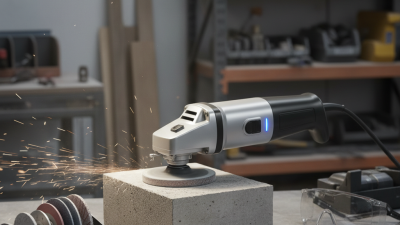
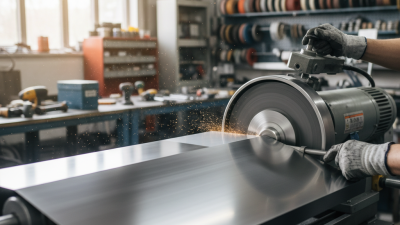
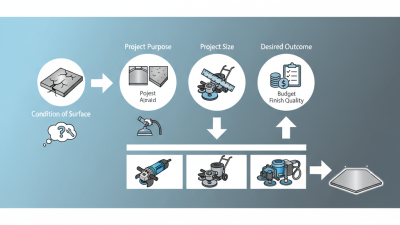
For global buyers, the best polishing tool depends on the material, surface area, and desired finish. Abrasive belts remove weld marks quickly from stainless steel panels. Their long contact area helps create an even grain. Rotary tools reach corners, holes, and narrow edges more effectively. They also demand steady hand pressure. Too much pressure can create deep circular scratches.

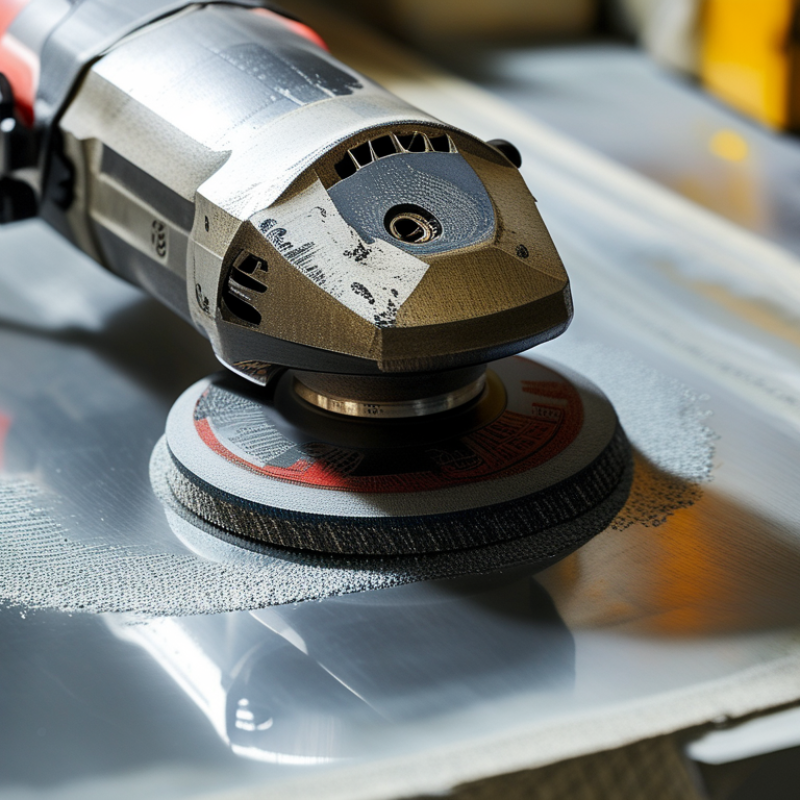
Orbital polishers produce smoother finishes on broad surfaces. Their changing movement reduces visible swirl marks during paint or metal polishing. However, they remove material more slowly than rotary tools. For mirror-like results, technicians often use progressively finer abrasive discs, followed by a soft polishing pad. Diamond abrasives work well on hard materials, such as stone or hardened glass. Wet polishing can reduce heat and airborne dust, but it requires careful water control.

I have found that tool selection alone does not guarantee consistency. Grit sequence, speed, pressure, and operator technique matter just as much. Record these settings during sample testing. Inspect the surface under angled light, not only under workshop lighting. I once accepted a finish that looked smooth indoors, yet showed cloudy marks in daylight. That mistake changed our inspection process. Some surfaces still need manual correction, especially near edges.

Which Tool Types Suit Specific Materials and Polishing Goals

What Is the Best Type of Polishing Tool for Global Buyers?

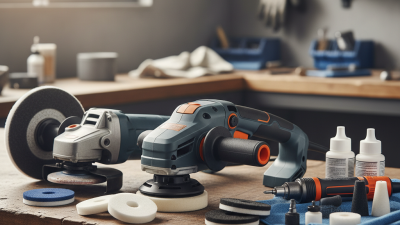
The best polishing tool depends on the material and the finish required. Rotary polishers suit hard metals and stone because they deliver strong cutting power. However, their aggressive action can create heat marks or uneven edges. Random orbital polishers offer safer control for painted surfaces, plastics, and finished wood. Their movement reduces visible swirl marks, especially during final polishing. For narrow edges, detail tools provide better access than full-size machines. Belt polishers work well for flat metal parts, but they can remove material too quickly.

Different goals require different abrasives and speeds. Heavy oxidation needs a firm pad and controlled pressure. A mirror finish needs softer pads, finer compounds, and several gradual passes. In practical workshop testing, variable-speed control has proved more useful than maximum power. It helps operators adjust pressure when the surface changes. Dust extraction matters for stone and wood. Wet polishing can reduce airborne particles and heat, but buyers must check electrical safety requirements in their market. No tool is perfect. I once selected a powerful unit for a delicate panel, and the result required extra correction.

Tips: Test the tool on scrap material first. Check speed settings, pad availability, replacement parts, and local electrical standards. Ask for measured noise and vibration data when possible. A cheaper tool may become expensive if its pads wear quickly. Product manuals are useful, but hands-on trials reveal weaknesses.

How to Compare Tool Performance, Control, Cost, and Durability

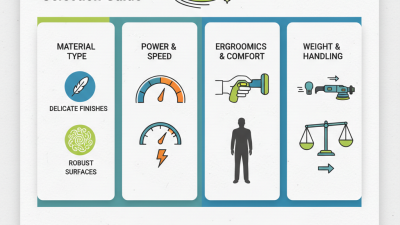
For global buyers, the best polishing tool is not always the fastest one. Compare four practical factors: finish quality, operator control, total cost, and durability. Grand View Research estimated the global power tools market at over USD 40 billion in 2023, showing strong demand but also intense product variation. Buyers should request tested data, not rely on catalog claims.

Check speed stability, vibration levels, heat buildup, and performance on stainless steel, aluminum, or painted surfaces. A mirror finish should remain consistent near edges.

Control matters during long shifts. EU-OSHA identifies hand-arm vibration as a significant workplace exposure, so buyers should examine vibration values, grip design, balance, and trigger response.

Lower vibration may improve comfort and reduce finishing errors. It may also reduce training time. Test it personally.

Cost comparison needs more than the purchase price. Include abrasive consumption, replacement parts, electricity, maintenance, and downtime. A cheaper tool can become expensive when its bearings fail early.

ISO 12100 risk-assessment principles support evaluating foreseeable operating risks before purchase. Durability should be checked through duty-cycle testing, temperature monitoring, and service records. Ask for independent test methods.

Some supplier data is incomplete. That is a weakness worth admitting.

Field trials on actual workpieces remain more reliable than polished brochures. A sensible comparison uses the same abrasive, material, pressure, and working time for every tool.

How Global Buyers Can Select and Verify the Right Polishing Tool

Global buyers should not choose a polishing tool by price or appearance alone.
Material, geometry, finish target, and production volume matter more. CBN wheels suit hardened steel, while diamond tools perform well on glass, ceramics, stone, and carbide. Aluminum oxide remains practical for general metal finishing. Flap wheels follow curved surfaces, but they may remove material unevenly. Check the required grit, tool diameter, hardness, and maximum RPM together. Never trust grit alone. Fortune Business Insights valued the global abrasives market at USD 47.16 billion in 2023, showing strong demand but also intense supplier variation.

Verification should begin with a technical data sheet, batch number, material specification, and test certificate. Compare the stated RPM with your machine’s operating speed. Ask for dimensional tolerances, balance information, and wet or dry application limits. An ISO 9001 certificate supports process control, but it does not prove polishing performance. Request a small sample from the same production batch. Measure surface roughness before and after testing with a calibrated profilometer. Record pressure, speed, coolant, and cycle time. Small details matter.

A glossy sample can mislead. In practical sourcing, one trial panel is rarely enough; different operators may create different results. Buyers should test several pieces and inspect edge quality, heat marks, scratches, and tool wear. The best tool is the one that delivers repeatable results under real factory conditions, not merely the smoothest sample in a supplier’s presentation. (Fortune Business Insights, Abrasives Market Report, 2024)

All search results